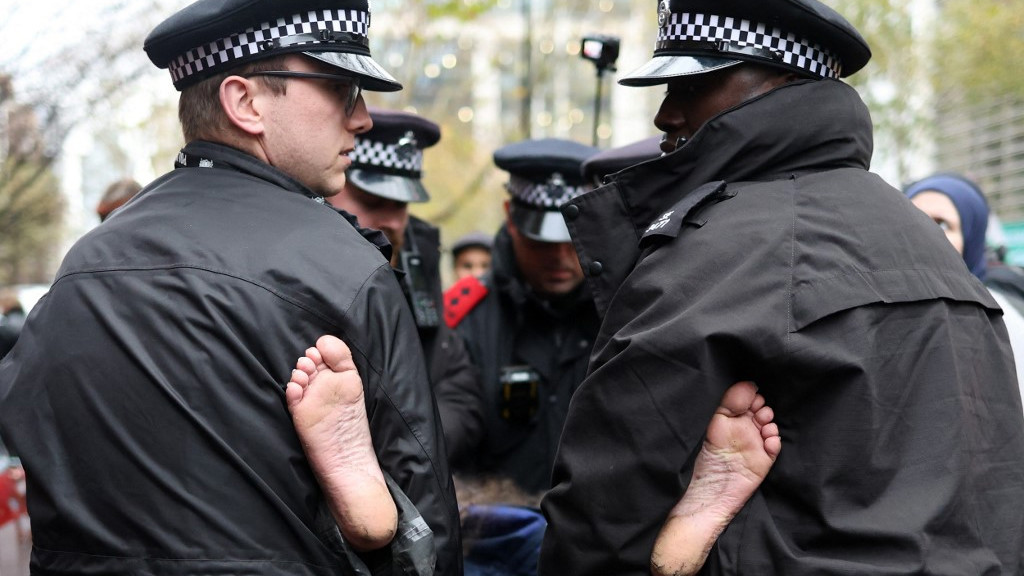
London’s Metropolitan Police took 86 individuals into custody on Saturday during a demonstration outside Wormwood Scrubs prison in west London. The protest was organized in solidarity with Muhammad Umer Khalid, a 22-year-old activist from the banned organization Palestine Action who has resumed a hunger strike while in custody.
Khalid represents the final member of a group of seven prisoners who initiated the hunger strike campaign to protest both their detention conditions and the government’s proscription of their direct action group. While three hunger strikers ended their protest on January 14th following the government’s decision to cancel a multi-billion-pound contract with the UK subsidiary of Israeli arms manufacturer Elbit Systems, Khalid has recommenced his food refusal after a brief pause on January 10th.
The young activist, who suffers from muscular dystrophy—a rare genetic condition causing progressive muscle weakness—previously halted an earlier hunger strike after his health deteriorated rapidly within 12 days. Khalid currently remains held on remand at HMP Wormwood Scrubs facing charges related to an alleged break-in by Palestine Action activists at RAF Brize Norton airbase in June of the previous year.
Among his demands are immediate bail and the cessation of what he describes as severe restrictions on his personal correspondence, telephone privileges, and visitation rights. Khalid reported through an intermediary that he had received just one visit, a single postcard, and merely two emails over a three-week period.
The Metropolitan Police stated that protesters were detained on suspicion of aggravated trespass, alleging they refused to vacate the prison grounds and obstructed staff from entering or exiting the facility.
A Ministry of Justice spokesperson responded on Sunday, characterizing the protest escalation as “completely unacceptable” while acknowledging the right to peaceful demonstration. The spokesperson emphasized that prison security was never compromised but warned that those responsible for creating risks would face consequences. The ministry confirmed that prisoners on hunger strike receive regular medical monitoring, including heart checks and blood tests, with hospital transfers occurring when healthcare teams deem it appropriate.