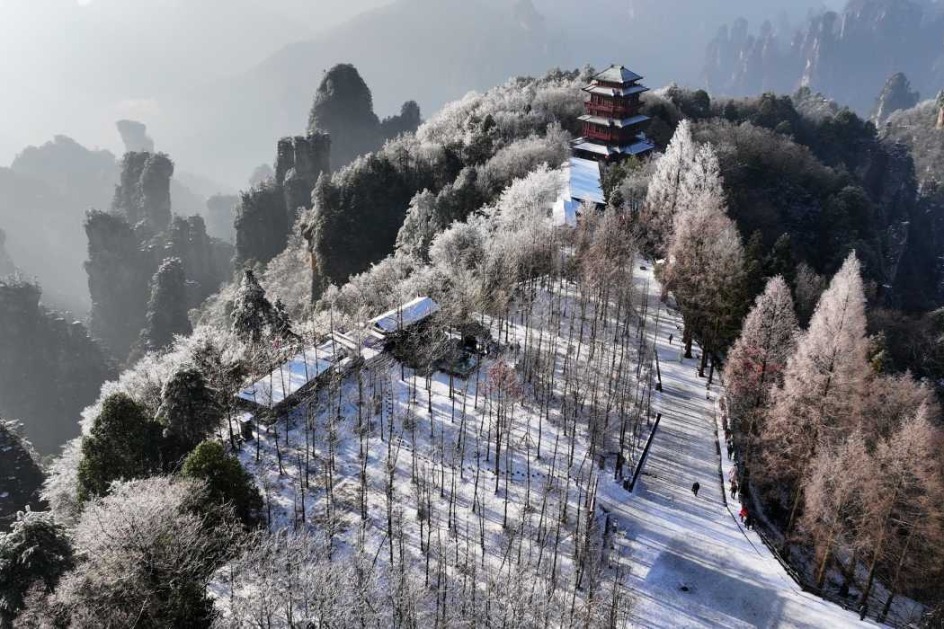
Zhangjiajie National Forest Park in China’s Hunan province has undergone a remarkable metamorphosis into an ethereal winter landscape following recent heavy snowfall. The precipitation has dramatically altered the park’s famous quartz-sandstone pinnacles, dressing them in pristine white mantles while adorning vegetation with intricate crystalline frost formations.
As dawn breaks, the park reveals its transformed splendor with morning sunlight penetrating lingering cloud layers to illuminate mist-enshrouded ridges in warm golden tones. The contrast between dark rock surfaces and snow-covered branches creates a striking visual spectacle throughout the mountainous terrain.
Tourist operations continue seamlessly with cable cars transporting visitors between forested slopes while observation decks host photographers and sightseers clad in vibrant winter attire. These visitors pause to capture the breathtaking panorama of snow-draped peaks against expansive winter skies.
The park’s administration has noted that these optimal winter conditions—combining snow-covered topography, exceptional visibility, and magnificent cloud formations—have established Zhangjiajie as Hunan province’s foremost cold-weather tourism destination. The phenomenon demonstrates how seasonal transformations can enhance natural landmarks’ appeal, offering visitors distinctly different experiences throughout the annual cycle.