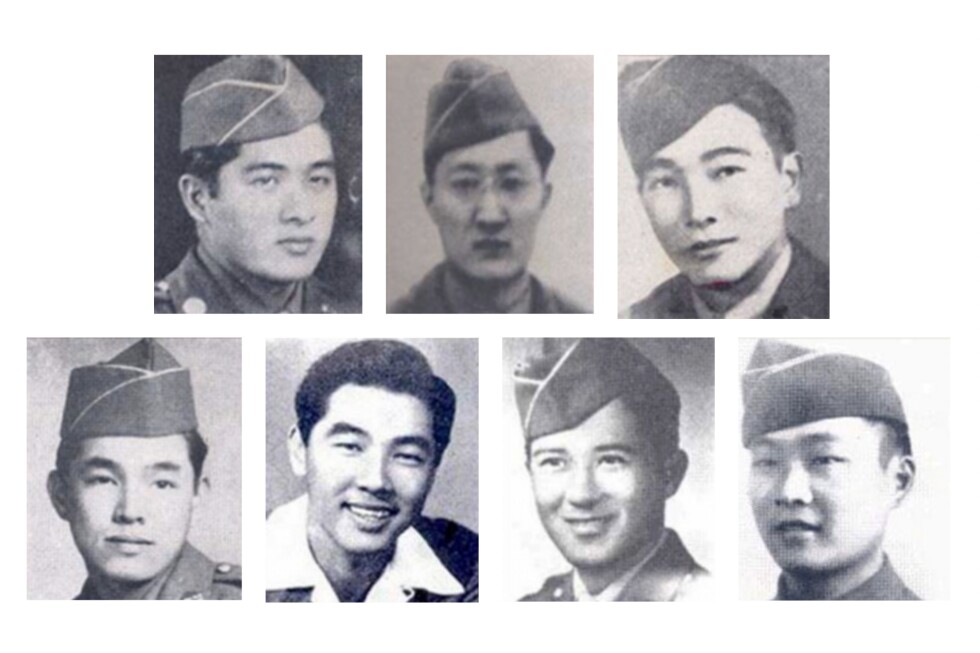
In a historic ceremony in Honolulu, the U.S. Army will posthumously promote seven Japanese American soldiers to officer ranks on Monday, finally recognizing their ultimate sacrifice eight decades after they perished fighting for a nation that initially branded them “enemy aliens.
The seven University of Hawaii ROTC cadets were on track to become Army officers when Japan’s attack on Pearl Harbor on December 7, 1941, triggered widespread discrimination against Japanese Americans. Despite their American citizenship (Hawaii was annexed in 1898, making them citizens though not yet state residents), they were barred from military service and designated enemy aliens.
These determined patriots initially served in the Hawaii Territorial Guard before joining the civilian labor battalion “Varsity Victory Volunteers,” performing manual labor such as ditch digging and rock breaking. In early 1943, they joined the newly formed segregated Japanese American regiment—the legendary 442nd Regimental Combat Team, which would become the most decorated unit in U.S. military history.
Tragically, all seven soldiers—Daniel Betsui, Jenhatsu Chinen, Robert Murata, Grover Nagaji, Akio Nishikawa, Hiroichi Tomita, and Howard Urabe—died in European combat in 1944. Six perished during Italy’s liberation from Nazi Germany, while Murata was killed by artillery in eastern France.
The ceremony will promote them to second lieutenant, the rank they would have achieved had they completed their ROTC program. The University of Hawaii had previously awarded them posthumous degrees in 2012.
First Sgt. Nakoa Hoe of the modern 100th Battalion, 442nd Regiment emphasized the significance: “They sacrificed so much at a challenging time when their loyalty to their country was questioned and they even had family members imprisoned.” Lieutenant Colonel Jerrod Melander, who initiated the commissioning effort in 2023, stressed that this recognition is about merit, not diversity initiatives, noting that “they served in the ultimate capacity of giving their lives for the country.”
The long-overdue honor comes amid ongoing national conversations about historical recognition and justice, serving as a powerful reminder that “everyone’s contribution to and sacrifice for the ideals of freedom and the security of this country should matter and should be acknowledged, regardless of who they are,” as stated by University of Hawaii’s Laura Lyons.