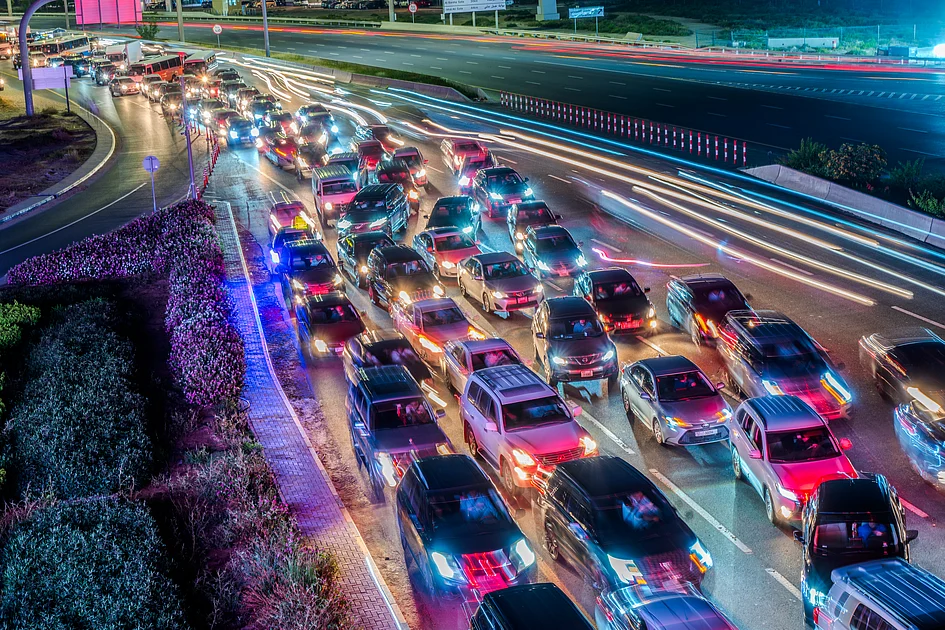
Dubai’s escalating traffic congestion reached critical levels in 2025 as motorists collectively wasted 72 hours stuck in gridlock—equivalent to losing three full days to commuting delays. This represents a significant deterioration from previous years, with drivers spending an additional 6.23 hours in traffic compared to 2024.
The root cause of this transportation crisis stems from Dubai’s unprecedented population growth, which surpassed four million residents for the first time. This demographic surge directly translated to increased vehicle numbers, with toll gate operator Salik reporting 4.65 million active registered vehicles by Q3 2025—nearly 100,000 more than the previous quarter.
Traffic analytics from TomTom’s comprehensive study reveal alarming metrics: the average 10-kilometer journey now requires 19.1 minutes—a substantial increase from 13.7 minutes in 2024. During peak hours, average speeds plummeted to 26.3 km/h, while highway velocities decreased by 2.1 km/h to 70.5 km/h.
November 11 emerged as the year’s most congested day, with evening rush hour congestion reaching 168% at 5 PM. The data highlights a striking disparity between morning and evening commutes—traveling 10 kilometers took 18.4 minutes in mornings but ballooned to 26.3 minutes during evening peaks, reducing average speeds from 32.1 km/h to 22.6 km/h.
In response to this growing challenge, Dubai’s Roads and Transport Authority has initiated billion-dirham infrastructure projects including new bridges at World Trade Centre Roundabout, expanded lanes on Al Hessa Street, enhanced airport access roads, and critical upgrades to Emirates Road. The situation is further complicated by daily inbound traffic from neighboring emirates including Sharjah, Ajman, and Abu Dhabi.