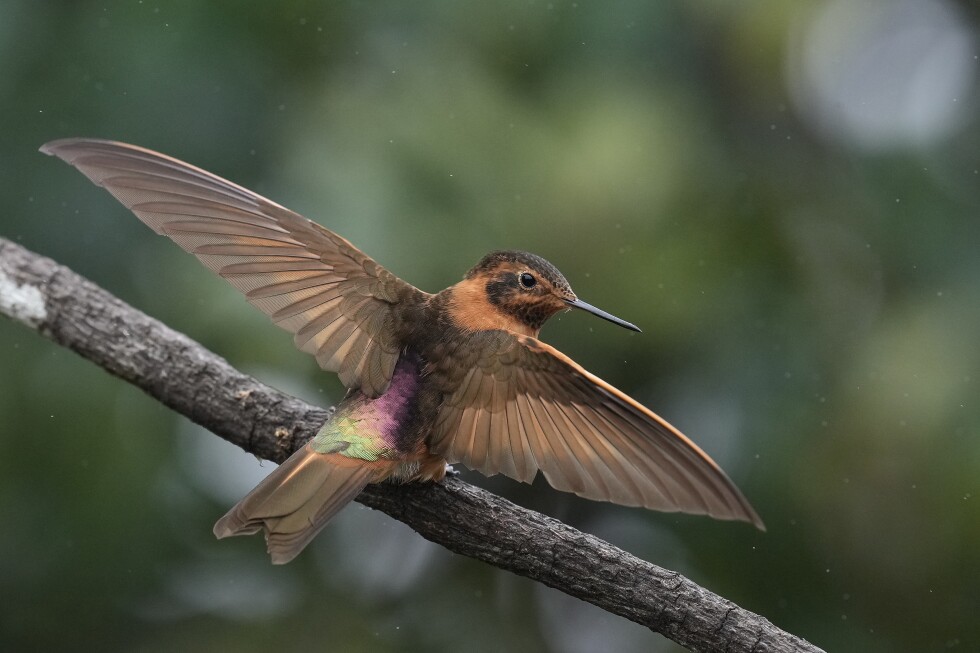
Nestled high in the Ecuadorian Andes, the Yanacocha Reserve represents a critical bastion of biodiversity conservation where scientists are fighting to prevent the extinction of one of Earth’s most imperiled avian species. This protected cloud forest serves as the exclusive habitat for the Black-breasted puffleg (Eriocnemis nigrivestis), a miniature hummingbird whose global population has plummeted to an alarming 150-200 individuals according to International Union for Conservation of Nature assessments.
The Jocotoco Foundation established this sanctuary twenty-five years ago, initially focusing on the puffleg’s protection but soon recognizing they were preserving an entire ecosystem. Conservationist Paola Villalba explained to Associated Press reporters that their mission expanded beyond single-species preservation to comprehensive habitat conservation.
This remarkable bird, measuring merely 9 centimeters and distinguished by distinctive white leg plumage contrasting with its metallic black chest and bronze-green wings, faces existential threats from agricultural expansion. The species occupies an exceptionally narrow ecological niche at elevations between 3,000-3,500 meters—precisely the altitude range most vulnerable to conversion into farmland and grazing pastures.
Shirley Farinango of the Birds and Conservation Foundation emphasized the intensifying pressure on this specialized habitat, noting that the puffleg’s survival hinges entirely on preserving these high-altitude forests. Conservation teams are now engaged in urgent reforestation efforts on the slopes of the Pichincha volcano, approximately 45 kilometers northwest of Quito, where these ‘smallest fairies of the Andes’ make their final stand against human encroachment.