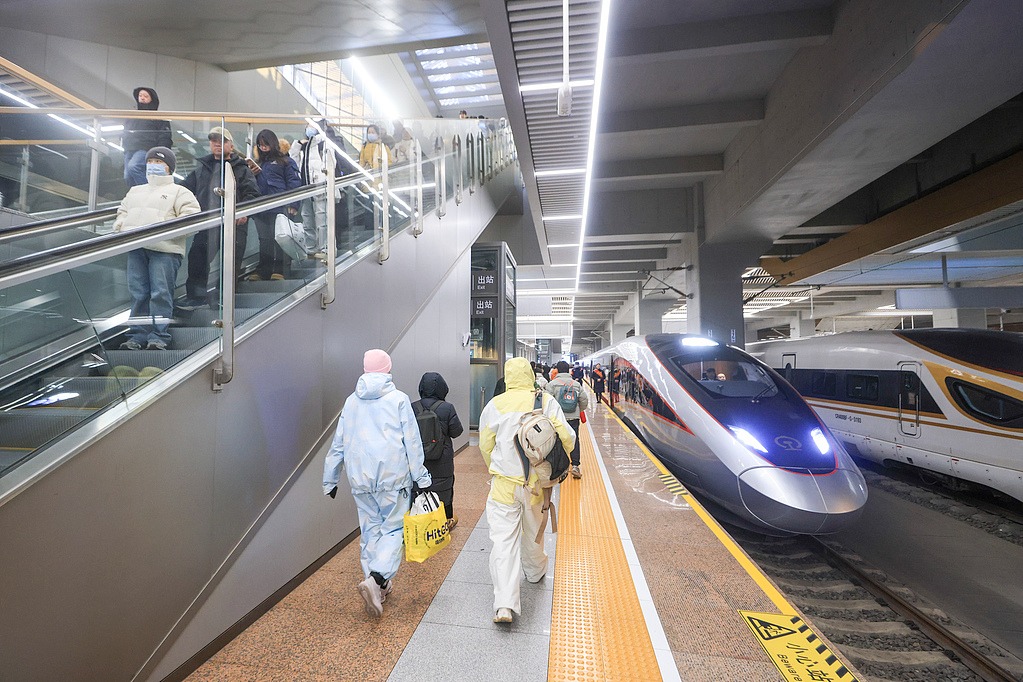
Beijing Chaoyang Railway Station has emerged as a transformative transportation nexus since its inauguration five years ago, fundamentally reshaping travel patterns across northern China. As the primary high-speed rail gateway connecting the capital with Northeast China and the Beijing-Tianjin-Hebei region, the station has witnessed remarkable growth in both passenger volume and service capabilities.
Statistical data reveals a dramatic surge in daily passenger traffic, escalating from approximately 12,000 to 30,000 commuters, culminating in nearly 44 million total passenger journeys handled since commencement. This infrastructure marvel has drastically compressed travel durations, exemplified by the Chengde-Beijing route reduction from four hours to a mere 49 minutes—a temporal compression revolutionizing regional mobility.
The station’s significance extends beyond conventional transportation services, evolving into a critical lifeline for medical emergencies. Station authorities report approximately 200 daily special assistance cases, with nearly one-quarter involving patients seeking urgent medical care in Beijing’s advanced healthcare facilities. In one particularly notable incident, station personnel facilitated emergency egress for a finger-severation victim from Inner Mongolia, enabling critical reattachment surgery within the narrow three-hour therapeutic window.
Technological integration enhances passenger experience through seamless multimodal connectivity. The 2024 inauguration of Subway Line 3’s initial phase established direct underground access, effectively resolving ‘last-mile’ challenges. Digital innovation through the 12306 ticketing platform enables pre-arrival special assistance requests, ensuring coordinated support between train crews and station staff.
Station official Wang Qiang emphasizes their strategic positioning as both regional integrator and specialized service provider: ‘Our continuous service optimization reflects dual commitments to macroeconomic regional development and micro-level passenger needs.’ Deputy Manager Cao Yan underscores the human dimension, noting the specialized assistance team has doubled to twelve members over five years to accommodate growing demand from travelers with serious medical conditions.
As passenger volumes continue their upward trajectory, Beijing Chaoyang Railway Station stands as testament to how modern transportation infrastructure can simultaneously drive regional economic integration and provide vital social support functions, fundamentally redefining the relationship between mobility, healthcare access, and regional development in contemporary China.