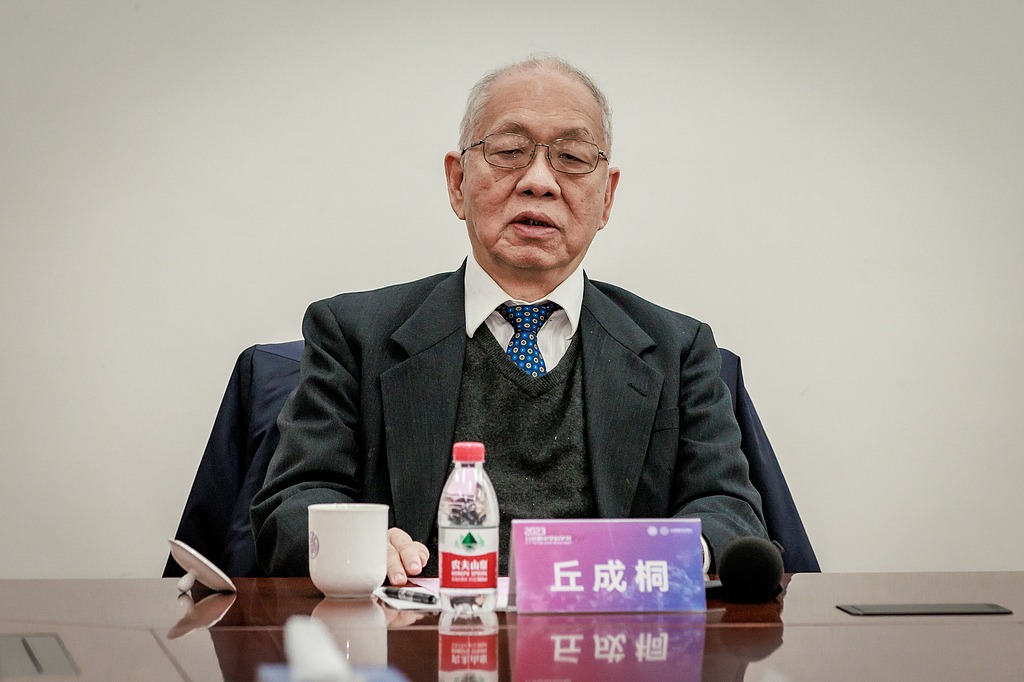
World-renowned mathematician Shing-Tung Yau has declared that Tsinghua University’s specialized mathematics program has surpassed expectations, with students demonstrating capabilities that rival and even exceed those from top American universities. The Fields Medalist and dean of Tsinghua’s Qiuzhen College revealed these findings in an exclusive interview, simultaneously calling for fundamental reforms in China’s education system.
The Yau Mathematical Sciences Leaders Program, established in 2020 with central government approval, selects approximately 100 secondary students annually for an accelerated eight-year bachelor’s-to-PhD track, exempting them from the traditional gaokao examination system. Now in its fifth year with nearly 800 students, the program has yielded exceptional results in the prestigious Putnam Competition—an intensely challenging undergraduate mathematics contest—where Tsinghua students have performed comparably to MIT counterparts and surpassed those from other elite US institutions since 2022.
Beyond competitive achievements, Yau emphasized the program’s interdisciplinary approach that integrates mathematics and physics with artificial intelligence, biology, and humanities. Students visit historical sites to develop cultural connections, with some producing reflective travel notes in classical Chinese. The program aims to cultivate passionate, innovative thinkers rather than narrow specialists.
Yau has additionally pioneered over 50 junior classes across China for gifted middle school students, enrolling approximately 3,000 twelve-year-olds annually. These programs emphasize authentic learning over exam preparation, fostering early interest in foundational sciences. The group-based admissions structure helps prevent psychological pressure and loneliness through peer support and mentoring from undergraduate and postdoctoral students.
Despite these successes, Yau acknowledged challenges as students advance to postgraduate studies. While undergraduate training remains strong, the true measure of success will be whether graduates can produce world-leading research that transforms mathematical paradigms. Although Qiuzhen College already features world-class mathematicians like Fields Medalist Caucher Birkar and top symplectic geometry scholar Kenji Fukaya as chair professors, Yau stressed the need for additional elite scholars to guide students toward groundbreaking research.
Yau criticized the exam-oriented approach that has dominated Chinese education over the past two decades, noting that drill-based preparation doesn’t represent traditional methodology. He expressed optimism about math graduates’ employment prospects given strong government support for basic science, urging young scholars to pursue deep engagement with their field rather than quick professional advancement.
The mathematician also defended humanities’ role in scientific education, arguing that literature, history, and philosophy provide emotional depth and perspective that computers cannot replicate. While AI can synthesize historical poetry and produce well-written texts, it cannot cultivate genuine personal emotion or the human capacity for inspired creation.
Yau measures the program’s ultimate success by its ability to produce thinkers who can change mathematics’ direction, not merely excel at examinations. With solid institutional backing, he believes Qiuzhen College students can eventually achieve this transformative impact on the field.