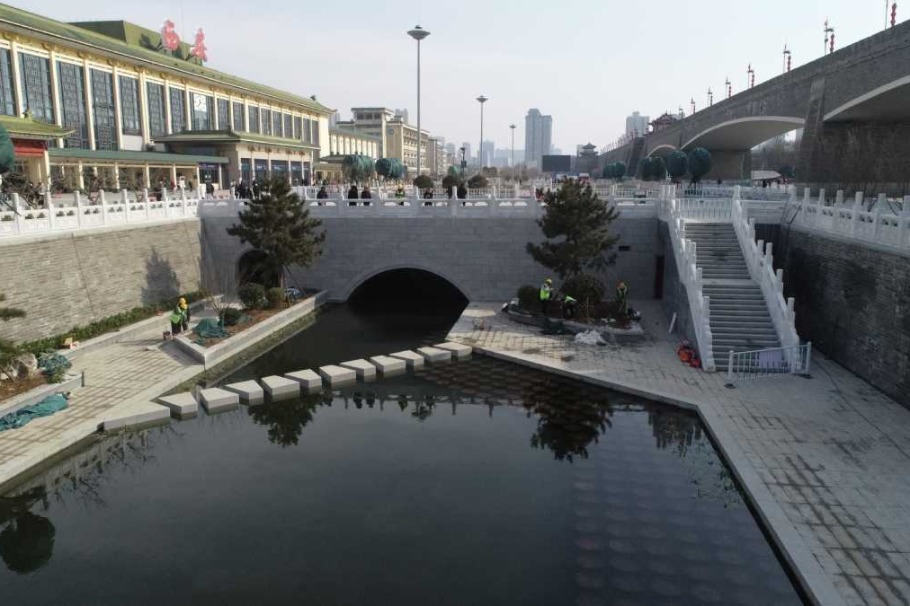
The ancient city of Xi’an has achieved a remarkable urban conservation milestone with the successful completion of its comprehensive moat restoration initiative. The recently concluded Phase II renovation project witnessed the historic rehydration of the railway station section, marking the final piece in reconnecting the entire 14.6-kilometer ancient waterway system.
This engineering triumph represents the first complete restoration of the moat since its initial construction during the late Tang Dynasty (618-907 CE). The recently revitalized 859-meter segment now flows seamlessly between two nationally protected cultural heritage sites: the iconic Xi’an City Wall and the historic Daming Palace ruins.
Prior to restoration, this critical section suffered from severe silt accumulation averaging 1.2 meters in depth, with some areas exceeding 1.5 meters of sediment. The degraded condition caused annual flooding during rainy seasons, creating problematic mixtures of stormwater, river overflow, and sewage throughout the channel.
The comprehensive renovation addressed multiple challenges simultaneously—historical preservation, urban infrastructure modernization, and environmental management. By restoring the original hydraulic connectivity, the project has not only revived an important historical landmark but also implemented contemporary water management solutions to prevent future flooding and contamination issues.
This achievement represents a sophisticated blend of archaeological conservation and urban planning, demonstrating how modern cities can successfully integrate historical preservation with functional infrastructure development. The restored moat now stands as both a testament to ancient Chinese engineering and a model for sustainable urban renewal practices.