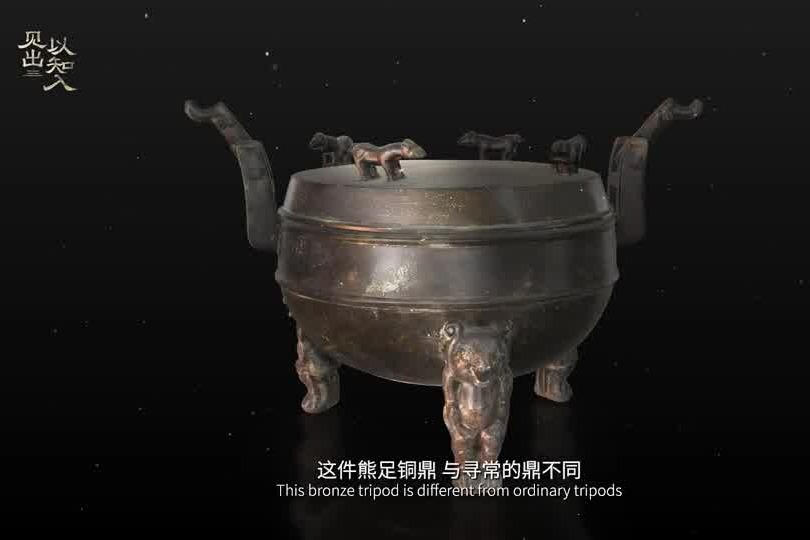
A remarkable archaeological artifact from China’s Hebei Province has unexpectedly become an internet sensation, drawing worldwide attention to ancient Chinese technological innovation. The Tripod with Bear-shaped Feet, housed at Hebei Museum in Shijiazhuang, has been affectionately dubbed the ‘ancient pressure cooker’ by fascinated netizens who have discovered its ingenious design principles.
Discovered in 1968 during excavations of a Western Han Dynasty (206 BC-24 AD) prince’s tomb, this bronze culinary vessel stands merely 18.1 centimeters in height but represents extraordinary engineering sophistication. The tripod features three delightfully crafted squatting bears serving as sturdy feet, while its true innovation lies in the sealing mechanism. The lid incorporates an advanced flip-and-twist locking system with animal-shaped latches that creates an exceptionally tight seal when engaged.
Archaeological experts confirm this sophisticated design enabled the trapping of steam within the vessel, creating higher internal pressure that significantly reduced cooking times—a fundamental principle that modern pressure cookers still utilize today. The precision engineering demonstrates that Han Dynasty craftsmen understood and applied principles of pressure cooking over two millennia before contemporary kitchen technology emerged.
Cultural heritage specialists have celebrated this discovery as evidence of China’s longstanding tradition of technological innovation and sophisticated metalworking capabilities. The artifact’s viral popularity has sparked renewed interest in ancient Chinese technological achievements, with museums worldwide noting increased public engagement with historical collections that demonstrate early scientific principles.