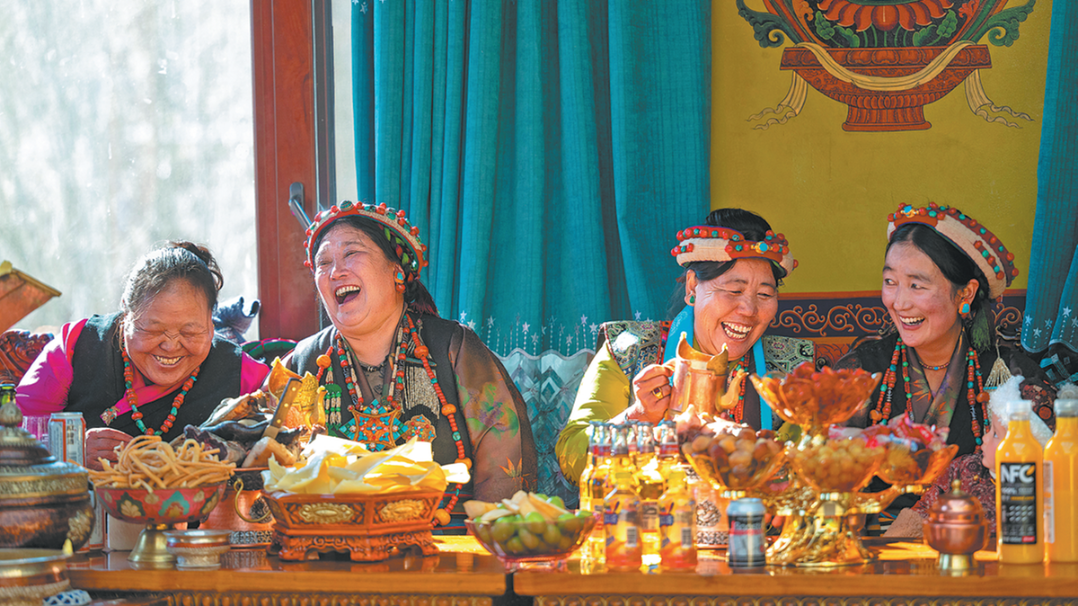
Across the high-altitude landscapes of Xizang Autonomous Region, vibrant celebrations for Losar—the traditional Tibetan New Year—are unfolding with profound cultural significance and communal joy. The festival, marked by intricate rituals and symbolic preparations, demonstrates the enduring preservation of Tibetan heritage amidst modern development.
In Lhasa’s historic Barkhor district, a sprawling seasonal market operating from January 14 to February 16 has become the epicenter of festive commerce. Two hundred forty stalls offer specialized goods ranging from ceremonial barley sprouts and artisanal dairy products to regional delicacies from Qinghai and Xinjiang. The market embodies a fusion of traditional practices with contemporary convenience, creating a comprehensive shopping experience for residents preparing for the celebrations.
Cultural symbolism permeates every aspect of Losar preparations. The Chemar Box, containing sacred tsampa (roasted barley flour), represents aspirations for abundance and prosperity. Elaborately painted barley ear decorations (Losar metok) and vibrant door curtains serve as traditional talismans believed to invite warmth and good fortune into households.
This year’s astronomical alignment creates a rare temporal proximity between Losar and the Spring Festival, with merely one day separating the two celebrations. Tibetan calendrical expert Tobgayl explains that this synchronization results from complex lunar calculations, with the festivals sometimes coinciding or occurring weeks apart depending on annual celestial variations.
Regional diversity characterizes Losar observances across Xizang. While most communities celebrate on the first day of the Tibetan calendar’s first month, residents of Shigatse and Nagchu traditionally observe the holiday at the commencement of the twelfth month—a distinction reflecting local agricultural cycles and geographical conditions.
Perhaps most poignant are the celebrations in Tsakhor village, where residents displaced by last year’s 6.8 magnitude earthquake are now observing Losar in newly constructed Tibetan-style homes. “We are finally celebrating in our new homes without worries,” expressed villager Pema Chungdak, capturing the collective resilience of communities rebuilding amidst preservation of cultural traditions.
From urban markets to rural villages, the pervasive spirit of renewal and cultural continuity defines this year’s celebrations, demonstrating how ancient traditions continue to shape contemporary life across the Tibetan plateau.