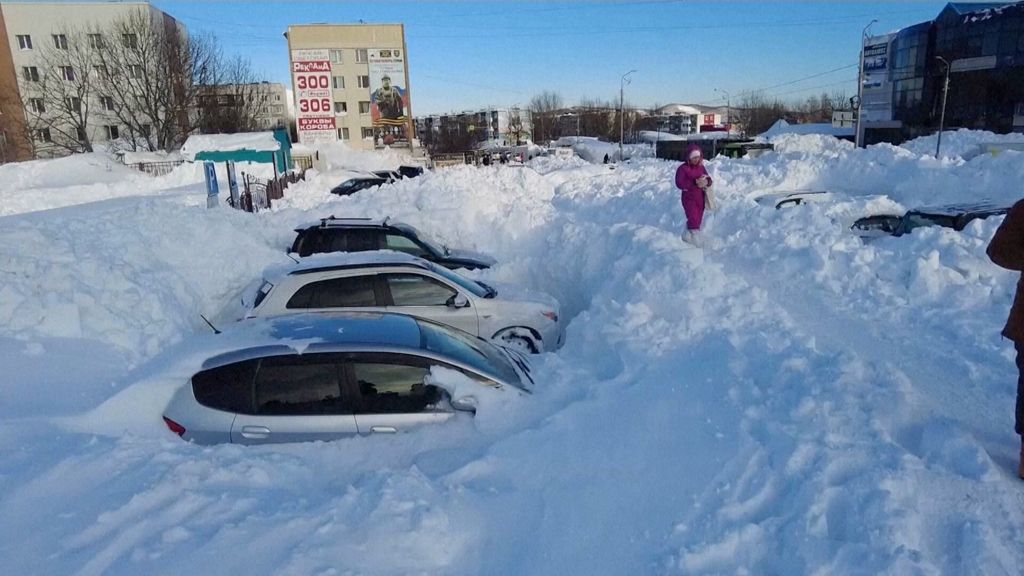
The Kamchatka Peninsula in Russia’s Far East is experiencing its most severe winter conditions in over six decades, with unprecedented snowfall creating a regional crisis. Meteorological records indicate that certain areas have accumulated snow depths not witnessed since the 1960s, leading to widespread transportation paralysis.
Local authorities report that numerous vehicles have become completely immobilized on roadways, while many residents find themselves trapped in their homes by massive snowdrifts. Emergency services are operating at maximum capacity, deploying specialized equipment to clear critical access routes and assist stranded citizens. The regional government has declared a state of emergency, prioritizing the restoration of essential services and transportation networks.
Climate scientists analyzing this extreme weather event suggest a potential connection to broader climate change patterns. Researchers note that while individual weather events cannot be directly attributed to climate change, the increasing frequency and intensity of such anomalies align with climate model predictions for northern latitudes. The warming Arctic region may be contributing to altered atmospheric patterns that generate more extreme winter precipitation events in certain regions.
The socioeconomic impact continues to mount as businesses remain shuttered and schools suspend operations indefinitely. Regional officials emphasize that recovery operations may require several days given the unprecedented volume of snow accumulation. Meteorological agencies are monitoring the situation closely, as additional precipitation is forecasted for the coming days.