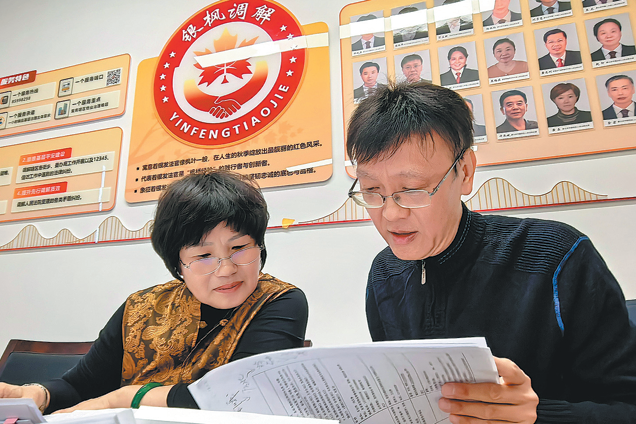
In a innovative approach to justice administration, retired judges across China are returning to courtrooms as mediators, leveraging their decades of legal expertise to resolve complex disputes that have eluded conventional resolution. This ‘silver-haired mediation’ program represents a strategic utilization of experienced legal professionals to strengthen grassroots governance and promote the rule of law.
The effectiveness of this initiative was recently demonstrated in Beijing’s Chaoyang District, where 71-year-old retired judge Hou Chunying successfully mediated a 37-year-old heating fee dispute that had persisted since 1987. The case involved 48 households of former radio factory employees facing a collective debt exceeding 1 million yuan ($142,000) in overdue heating fees, plus substantial penalties.
Judge Hou discovered that the conflict stemmed from outdated accounting methods, differing opinions among residents, and the factory’s financial difficulties. Rather than proceeding with litigation that would have placed undue burden on the residents, she identified an existing agreement between the heating provider and the factory that offered a pathway to resolution.
Through separate negotiations with both parties, Hou persuaded the factory to acknowledge its social responsibilities while convincing the heating center to reduce the debt amount considering the factory’s financial constraints. Her mediation resulted in a one-time settlement payment of 700,000 yuan, resolving the nearly four-decade-old dispute to the satisfaction of all parties involved.
The Supreme People’s Court has officially endorsed this growing movement, recognizing retired judges as valuable legal assets whose extensive experience and specialized knowledge make them particularly effective in alternative dispute resolution. These veteran jurists bring not only technical legal expertise but also the wisdom gained from handling thousands of cases throughout their careers.
Beyond resolving specific cases, the program addresses systemic challenges within China’s judicial system by reducing caseloads for active judges, easing court congestion, and providing cost-effective resolution mechanisms for complex historical disputes. For the retired judges themselves, the initiative offers meaningful engagement in their post-retirement years, allowing them to continue contributing to the legal system and society.