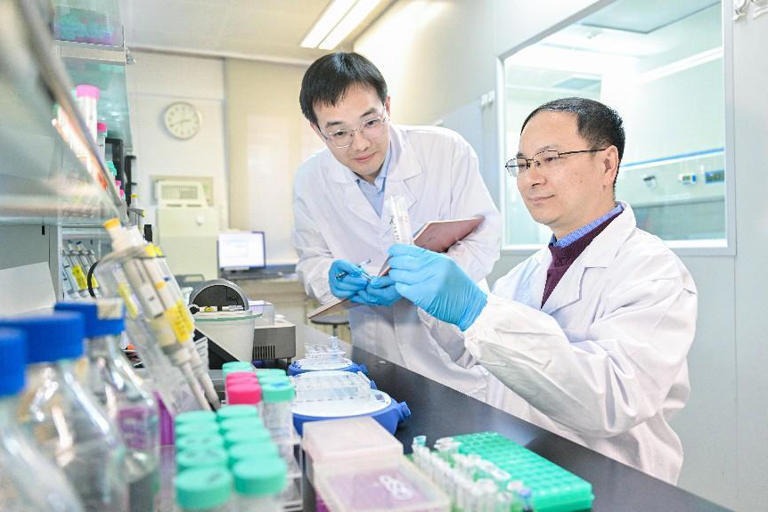
Researchers from the Chinese Academy of Sciences have achieved a groundbreaking advancement in biomedical science with the development of SupTACs (supramolecular targeting chimeras), a novel technology enabling unprecedented precision in targeting and eliminating disease-causing proteins within living organisms. This breakthrough, detailed in the prestigious journal Cell, represents a significant leap forward in targeted protein degradation therapeutics.
The innovative approach addresses critical limitations in conventional treatment methodologies by leveraging the body’s natural ubiquitin-proteasome system. Unlike traditional small-molecule drugs that merely inhibit protein function, SupTACs actively facilitate the complete degradation of specific pathological proteins through precise molecular recruitment mechanisms. This technology demonstrates remarkable spatial and temporal control, effectively minimizing off-target effects that have hampered previous therapeutic attempts.
Professor Wang Ming, lead investigator at the Institute of Chemistry, emphasized the transformative potential of this development: ‘Our SupTACs platform provides researchers with unprecedented control over protein degradation processes, offering new therapeutic avenues for conditions previously considered undruggable. The technology has shown consistent efficacy across multiple animal models, including non-human primates, indicating strong potential for clinical translation.’
This advancement holds particular significance for treating complex disorders including various cancer types and neurodegenerative conditions where traditional therapeutic approaches have proven inadequate. The research team’s successful demonstration of controlled protein degradation in vivo marks a critical milestone toward practical clinical applications that could revolutionize treatment paradigms for numerous challenging diseases.