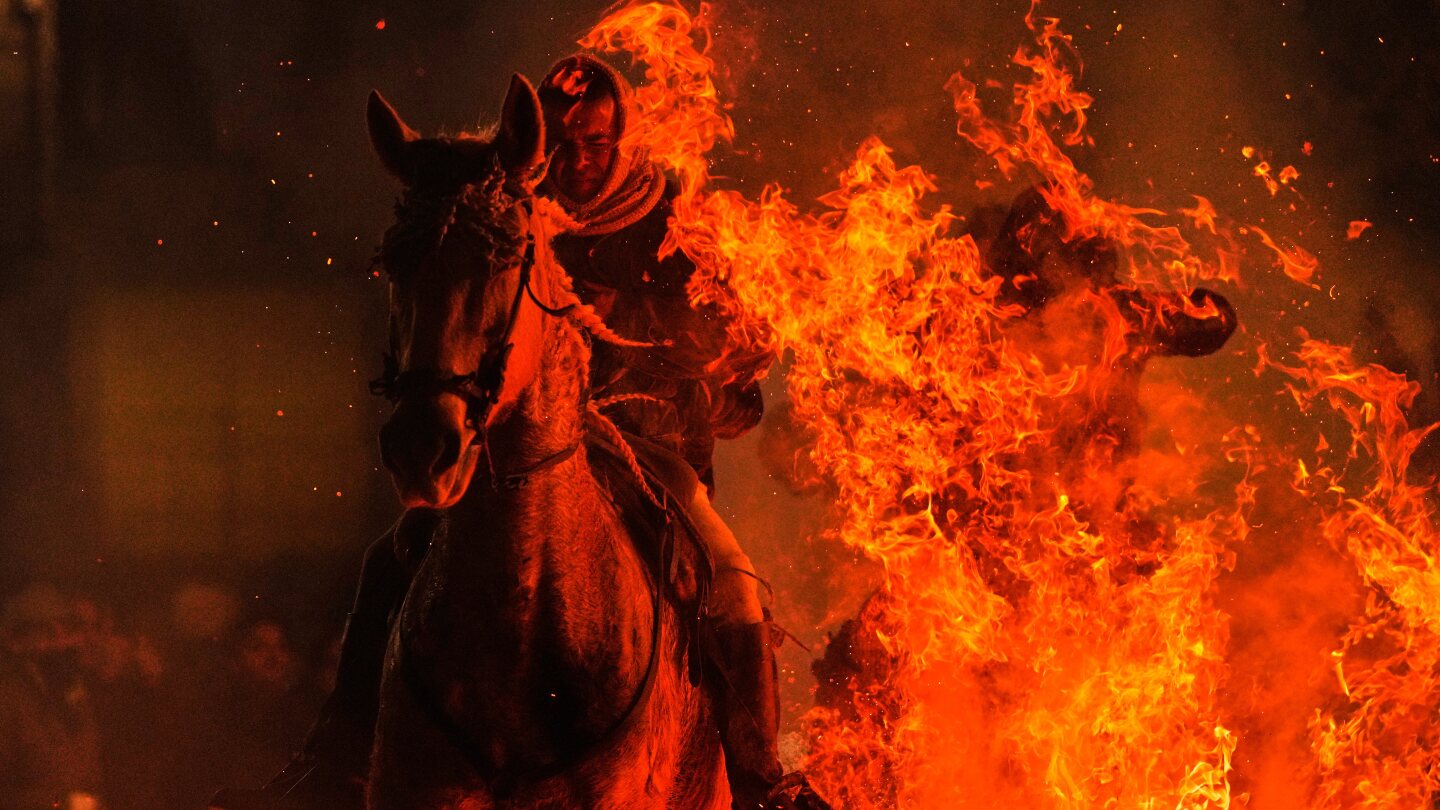
In the small Spanish village of San Bartolome de Pinares, an extraordinary centuries-old tradition unfolded as riders guided horses through roaring bonfires during the annual Las Luminarias festival. Meanwhile, in Madrid, pet owners gathered with their dogs and cats for a more tranquil blessing ceremony at St. Anthony’s Church. Both events honor St. Anthony the Abbott, patron saint of domestic animals, occurring every January in contrasting yet parallel celebrations.
The fiery spectacle in the rural village (population approximately 500), located 100 kilometers from Madrid, involves riders preparing their horses with fire-resistant tape on tails and protective glazes on manes before navigating through strategically placed bonfires. Local attendees like 62-year-old Antonio Patricio explain the historical context: “This tradition originated from the belief that smoke and branches could bless and heal farm animals, preventing illness and ensuring their continued fieldwork capacity.”
Despite ongoing criticism from animal rights organizations, festival participants maintain that injuries to horses are exceptionally rare. The event begins with community gatherings featuring shared wine, beer, and sweets before the dramatic fire-jumping ceremony that continues into the early hours.
Conversely, Madrid’s urban celebration involves priests sprinkling holy water on pets brought by owners seeking annual blessings for their animals’ health and protection. The visibly calmer ceremony featured dogs in winter vests and somewhat bewildered-looking cats, with attendees like Rosa Gomez expressing appreciation for the tradition while holding her adopted dog Kia.
These rituals reflect Spain’s deep cultural connections to animal husbandry traditions, particularly in rural areas experiencing population decline. The smoke purification practice reportedly originated centuries ago when a mysterious illness affected village animals, leading to the belief in smoke’s healing properties. Today, the tradition serves not only as spiritual practice but also as cultural preservation, bringing families and visitors together in Spain’s gradually emptying countryside.