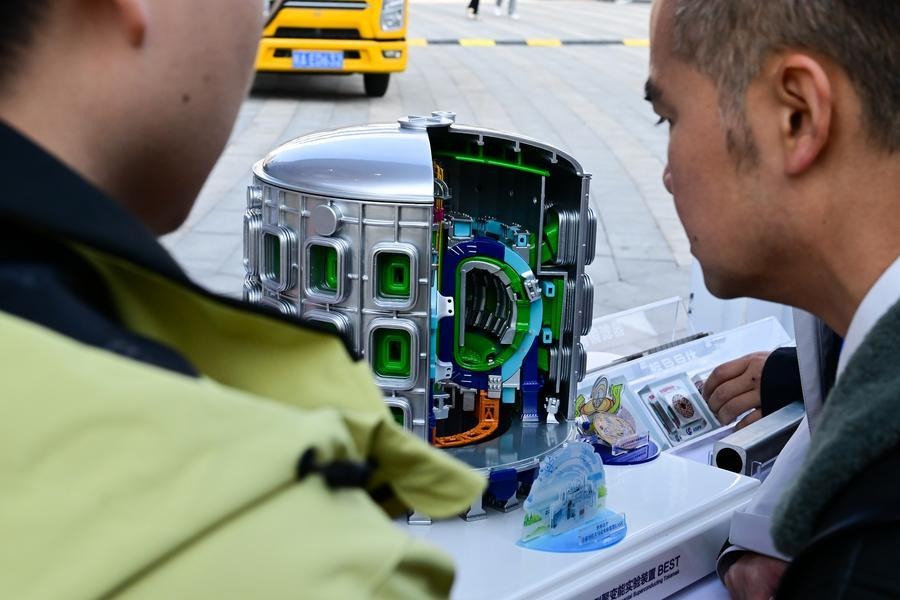
China is dramatically accelerating its nuclear fusion program, shifting from fundamental research to large-scale engineering implementation. The ambitious Burning Plasma Experimental Superconducting Tokamak (BEST) project represents this strategic pivot, with construction advancing rapidly toward demonstrating net fusion power gain and electricity generation by approximately 2030.
This groundbreaking update emerged from the Fusion Energy Technology and Industry Conference 2026 in Hefei, Anhui Province, where scientists described the project as potentially lighting humanity’s “first nuclear-fusion-powered lamp.” The BEST facility marks a historic transition in global fusion development from scientific exploration to practical energy demonstration.
Unlike previous experimental devices, BEST is specifically engineered to achieve actual “burning” of deuterium-tritium plasma, replicating the nuclear fusion process that powers the sun. Fusion energy, often termed the “ultimate energy source,” promises virtually limitless clean energy without the radioactive waste associated with nuclear fission.
China’s fusion program is recognized as a global leader, with its Experimental Advanced Superconducting Tokamak (EAST) having repeatedly set world records. Chinese teams have also contributed significantly to the International Thermonuclear Experimental Reactor (ITER) through multiple key procurement packages.
The conference additionally announced plans for a “Fusion City” in Changfeng County, Hefei—a comprehensive science and innovation demonstration zone integrating research campuses, industrial clusters, and residential facilities centered around major fusion engineering projects.
This development occurs within a competitive global context, with the United States, Japan, and the United Kingdom similarly accelerating their fusion power plant initiatives, many targeting fusion electricity generation before 2040.