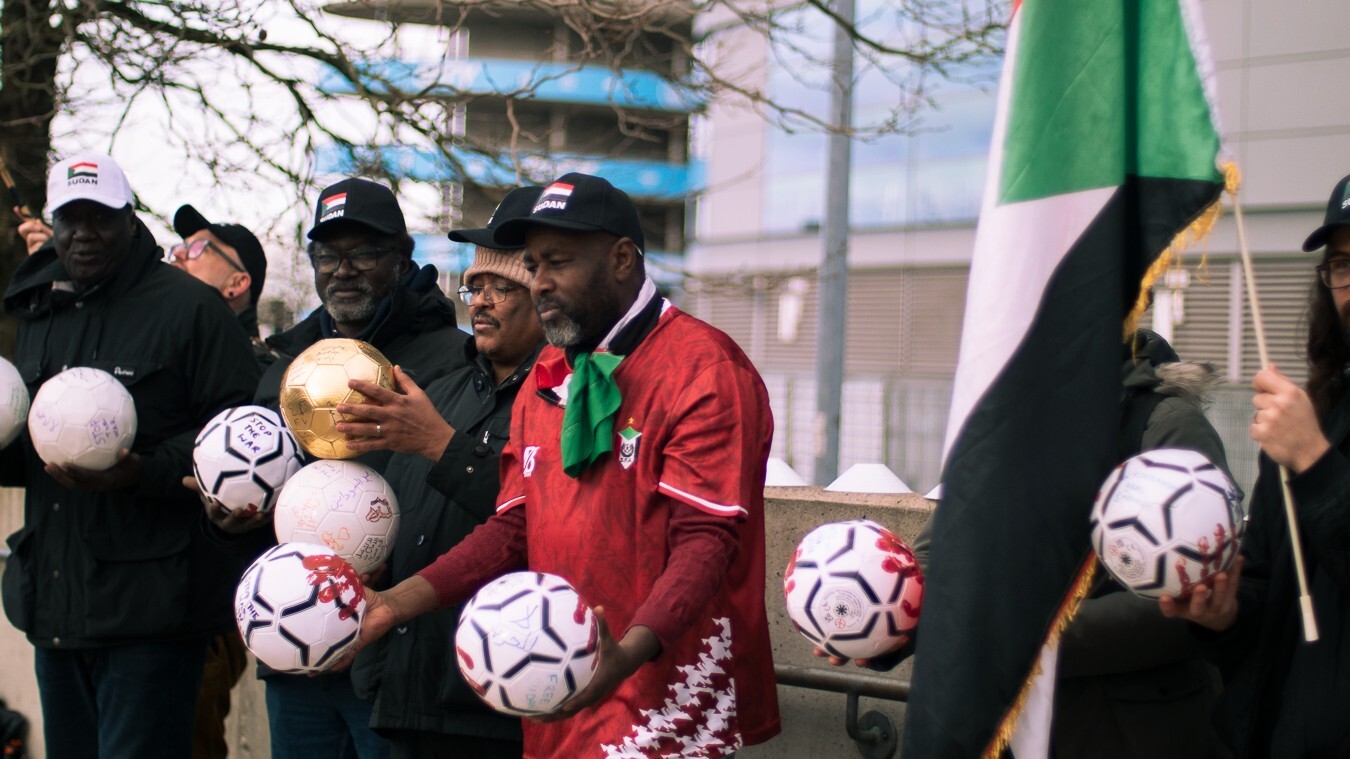
On a frigid Wednesday morning in Manchester, a small but determined group of Sudanese exiles gathered outside Etihad Stadium, home to Manchester City Football Club. Their protest targeted not the team’s performance on the pitch, but its owner’s alleged involvement in the devastating conflict they had fled.
Farid Kelana, who sought refuge in the UK two years ago after escaping Sudan’s violence, expressed his outrage to Middle East Eye: “I feel totally angry about the idea that football is linked to war crimes, linked to killing people.” Kelana had settled in Manchester months after conflict erupted in Sudan in April 2023, never anticipating his new city would connect to the war he thought he had left behind.
The demonstration highlighted the controversial ownership of Manchester City by Sheikh Mansour bin Zayed Al Nahyan, vice president of the United Arab Emirates and brother to the nation’s ruler. Extensive investigations have revealed the UAE serves as a primary supporter of Sudan’s Rapid Support Forces (RSF) paramilitary group, supplying weapons through complex networks across multiple African nations. The UAE consistently denies these allegations.
According to intercepted communications reviewed by US officials, RSF commander Mohammed Hamdan Dagalo (known as Hemedti) maintains direct contact with Sheikh Mansour. American intelligence concludes the Manchester City owner has played a central role in arming the paramilitary group responsible for widespread atrocities.
Kiri Kankhwende of Christian Solidarity Worldwide stated: “Man City has a proud heritage, but the money funding these victories is financing the killing of children, women, and innocent civilians. This is too high a price to pay for victory.”
Despite the modest turnout of approximately twenty protesters, participants demonstrated remarkable resolve. Mohaned Elnour, a Sudanese consultant residing in the UK for seven years, acknowledged the physical discomfort: “You can see my hands are freezing, but I’m doing something to support my people in Sudan.”
The protest featured footballs inscribed with anti-war messages by Sudanese refugees living in Ugandan camps, symbolizing the connection between the beautiful game and distant suffering. While Manchester City officials briefly inquired about the nature of the demonstration, passing drivers occasionally honked in support upon recognizing Sudanese flags.
Activists pointed to the Premier League’s updated Owners and Directors Test, approved unanimously by all 20 clubs three years ago, which includes human rights abuses as grounds for disqualification. Scot Bower, head of Christian Solidarity Worldwide, emphasized: “The evidence indicates Sheikh Mansour should not own a football club. Those are the rules of the Premier League.”
Protesters highlighted the precedent set when Chelsea FC was seized from Roman Abramovich following Russia’s invasion of Ukraine, questioning why similar standards aren’t applied to the UAE’s involvement in Sudan. Activists suggest the UK’s substantial economic ties with the UAE have created a double standard in addressing human rights concerns.
Despite these challenges, organizers believe football fans possess unique power to effect change. As Mohannad Taha of Manchester4Sudan noted: “The football community taking action on Sudan can directly impact the war’s cessation. We’re talking about substantial resources, cultural capital, and emotional investment.”