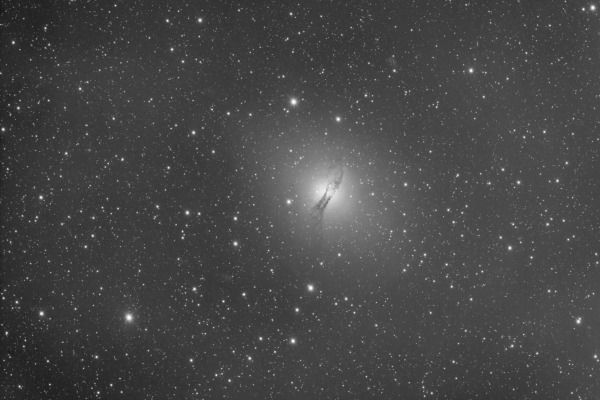
China’s cutting-edge Antarctic survey telescope AST3-2 has successfully concluded its 2025 winter observation mission at Dome A, the highest point of the Antarctic plateau. The Chinese Academy of Sciences announced this significant achievement on Tuesday, marking another milestone in polar astronomical research.
The AST3-2 telescope, currently the largest-aperture optical instrument operating in Antarctica’s interior, has now completed three consecutive years of winter operations despite extreme environmental challenges. Remarkably, the telescope has been continuously operational at Dome A for an impressive 12-year period, demonstrating exceptional engineering resilience.
According to the Nanjing Institute of Astronomical Optics & Technology, which developed the advanced instrument, the telescope resumed normal operations following brief maintenance in early 2024, despite three consecutive years without on-site technical personnel reaching the remote inland station.
The 2025 observation season yielded substantial scientific returns, with the telescope remotely acquiring 3.5 terabytes of valuable astronomical data during approximately 1,000 hours of effective observation time. The comprehensive dataset encompasses multiple research domains, including applied studies on high-inclination asteroids and space objects, alongside critical scientific information regarding exoplanet research and photometric observations of supermassive black holes.
The AST3-2 represents China’s second-generation Antarctic telescope technology, incorporating innovative optical systems specifically designed for polar conditions. The instrument features groundbreaking anti-snow sealing technology and specialized low-temperature anti-frost systems developed to withstand Antarctica’s harsh environment, where temperatures can plummet to -80°C during the winter months.
The successful conclusion of the observation season was formally marked on August 25, 2025, when the solar battery system achieved its initial recharge following the Antarctic polar night, signaling the return of sunlight to the research station.