ROME (AP) — In a landmark initiative to combat the irreversible loss of glacial archives, scientists have established the world’s first international repository for mountain ice cores within Antarctica’s frozen depths. This pioneering preservation effort aims to safeguard invaluable atmospheric history for future generations as climate change accelerates glacial melt worldwide.
Ice cores function as natural time capsules, encapsulating millennia of Earth’s atmospheric composition within their frozen layers. With glaciers vanishing at unprecedented rates, researchers have initiated an urgent global mission to extract and preserve these climatic records before they permanently disappear.
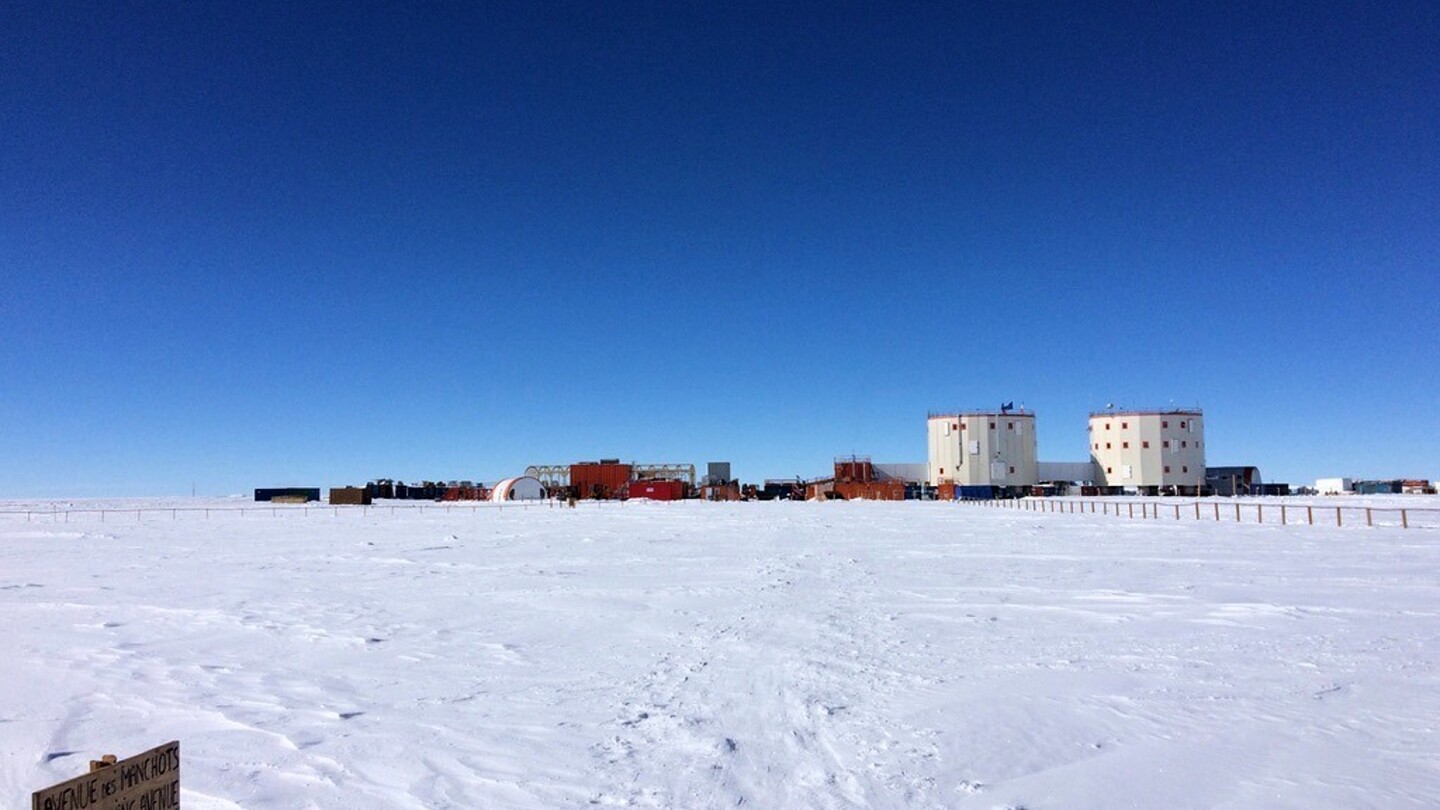
The inaugural shipment, containing 1.7 tons of meticulously preserved ice cores from Mont Blanc in France and Grand Combin in Switzerland, recently completed a 50-day refrigerated voyage aboard an icebreaker from Trieste, Italy. These foundational samples now reside in a specialized snow cave at Antarctica’s Concordia research station, maintained at a constant -52°C (-61°F) to ensure perpetual preservation.
The Ice Memory Foundation—a consortium of European research institutions including France’s National Centre for Scientific Research, Italy’s National Research Council, and Switzerland’s Paul Scherrer Institute—officially inaugurated the frozen archive on Wednesday. Since its 2015 launch, the project has identified ten critical glacier sites worldwide for core extraction and future transportation to the Antarctic sanctuary.
Professor Carlo Barbante, vice chair of the Ice Memory Foundation and professor at Ca’ Foscari University in Venice, emphasized the project’s significance: “By preserving physical samples of atmospheric gases, aerosols, pollutants and dust trapped in ice strata, we ensure future researchers can study past climate conditions using technologies not yet developed.”
Scientific data reveals the alarming scale of glacial loss: since 2000, glaciers have diminished between 2% and 39% regionally, with approximately 5% of global glacial ice already vanished. This degradation threatens to erase irreplaceable atmospheric records crucial for understanding climate dynamics.
Celeste Saulo, Secretary-General of the U.N. World Meteorological Organisation, characterized the preserved cores as “critical reference points rather than mere relics” that will enable scientists across generations to comprehend the pace, scale, and mechanisms of environmental transformation.
The foundation’s decade-long vision includes establishing an international convention to guarantee permanent protection and accessibility of these frozen archives for future scientific inquiry, creating an enduring legacy of Earth’s climatic history amidst rapid environmental change.