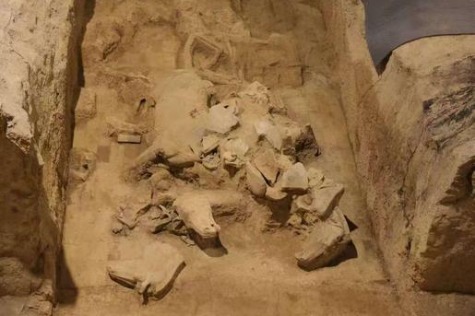
In a significant archaeological breakthrough, researchers excavating the perimeter of Emperor Qin Shi Huang’s mausoleum in Shaanxi province have uncovered two ancient ceremonial chariots devoid of wheels. The discovery emerged during a 2025 excavation project covering 30 square meters within Pit No. 2 at the renowned mausoleum site museum.
The excavation team, led by project director Zhu Sihong from the Emperor Qinshihuang’s Mausoleum Site Museum, revealed that the finding represents the first confirmed instance of wheel-less chariot burial in this section of the archaeological complex. Alongside the chariots, archaeologists recovered 15 pieces of sophisticated chariot and horse gear alongside nine ancient weapons.
According to Zhu, the absence of wheels suggests these vehicles served a symbolic rather than practical purpose within the emperor’s subterranean army. This discovery provides new insights into the funerary practices and spiritual beliefs of the Qin Dynasty (221 BC-207 BC).
Pit No. 2, spanning approximately 6,000 square meters, is believed to contain over 1,300 terracotta figures including charioteers, cavalry units, and both kneeling and standing archers. Many of the best-preserved painted terracotta artifacts discovered to date originate from this section of the burial complex.
The Terracotta Army, first unearthed in 1974, represents one of the most significant archaeological discoveries of the 20th century. Commissioned by China’s first emperor to accompany him in the afterlife, the site gained UNESCO World Heritage status in 1987. To date, thousands of life-sized clay soldiers and extensive weaponry have been recovered from three primary pits surrounding the main tomb, offering unprecedented understanding of Qin Dynasty military organization, artistic achievement, and social structure.