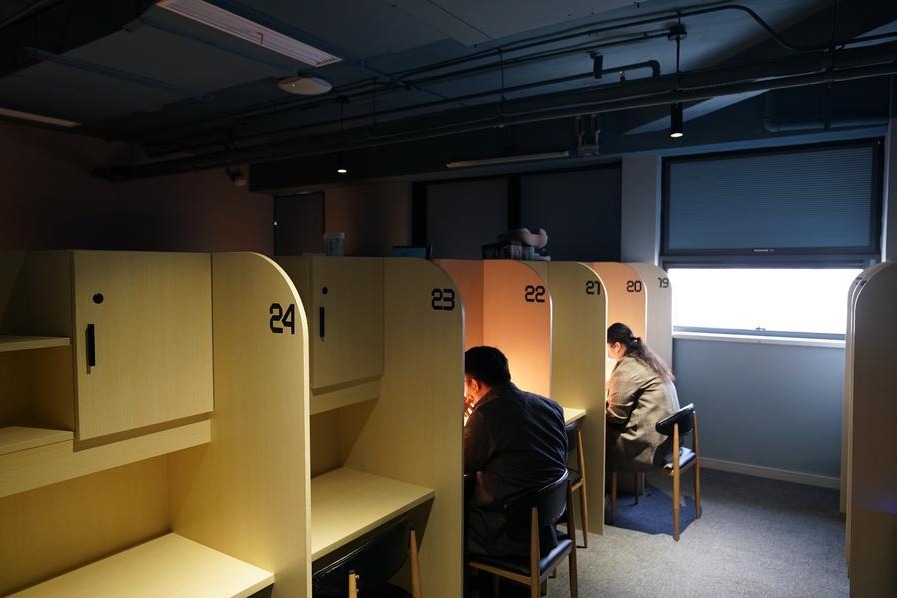
Across urban China, a quiet revolution in learning is unfolding within the walls of specialized paid study spaces that have become essential sanctuaries for the nation’s ambitious youth. These meticulously designed environments offer much more than mere quiet—they provide structured havens for concentrated study amid increasingly competitive academic and professional landscapes.
The phenomenon represents a sophisticated market response to growing educational pressures. Modern study rooms feature sound-proofed cubicles, ergonomic furniture, optimized lighting systems, and amenity-rich spaces complete with printers, beverage stations, and rest zones. Flexible membership options cater to diverse needs, ranging from hourly access to comprehensive annual packages.
Industry pioneer Zhongxiang Study Room exemplifies this rapid expansion. Since its 2023 establishment in Hebei province, the chain has grown to encompass over 60 corporate locations and 100 franchised outlets, serving approximately 140,000 registered users while generating roughly 10 million yuan ($1.4 million) in annual revenue. According to company director Meng Yulong, over half their clientele consists of postgraduate and civil service examination candidates.
Beyond commercial success, these spaces fulfill deeper sociological needs by creating environments of mutual dedication. ‘The collective determination becomes genuinely contagious,’ noted Wang Pan, a regular at Beijing’s Chenxi Study Room. Unwritten protocols govern behavior—phone conversations remain outside, cleanliness is maintained, and inspirational messages adorn bulletin boards, fostering what users describe as a powerful ‘shared journey’ of improvement.
Industry analysts estimate approximately 100,000 such facilities nationwide, representing an annual market value exceeding 10 billion yuan. With average monthly passes costing 400 yuan and venues typically containing 50 seats, the business model demonstrates significant economic viability while addressing urban youth’s need for distraction-free environments unavailable at home or in crowded public libraries.
The trend reflects broader societal shifts toward continuous skill development. Many users represent career changers like Xiao Peng, who transitioned from bioengineering to computer science studies, or professionals like Tianjin’s A Lan, who left high-pressure technology sector employment to pursue civil service examinations in these dedicated spaces.
According to Nankai University expert Zhang Zhihong, ‘These environments demonstrate young people’s self-motivated adaptability and highlight growing demand for concentration-friendly spaces that support personal development—a need both commercial operators and public services should address.’
The movement aligns with national initiatives promoting reading culture and lifelong learning, complementing upgraded public libraries and community reading spaces. As China’s latest five-year development plan emphasizes educational advancement, these study rooms have evolved into integrated learning hubs that may eventually offer complimentary basic access alongside premium services.
As midnight approaches in Beijing’s Changping district, the lights at Chenxi Study Room continue illuminating rows of determined learners—their silent dedication punctuated only by turning pages and keyboard clicks, embodying China’s next generation of dream-chasers investing in their futures through concentrated effort and mutual inspiration.