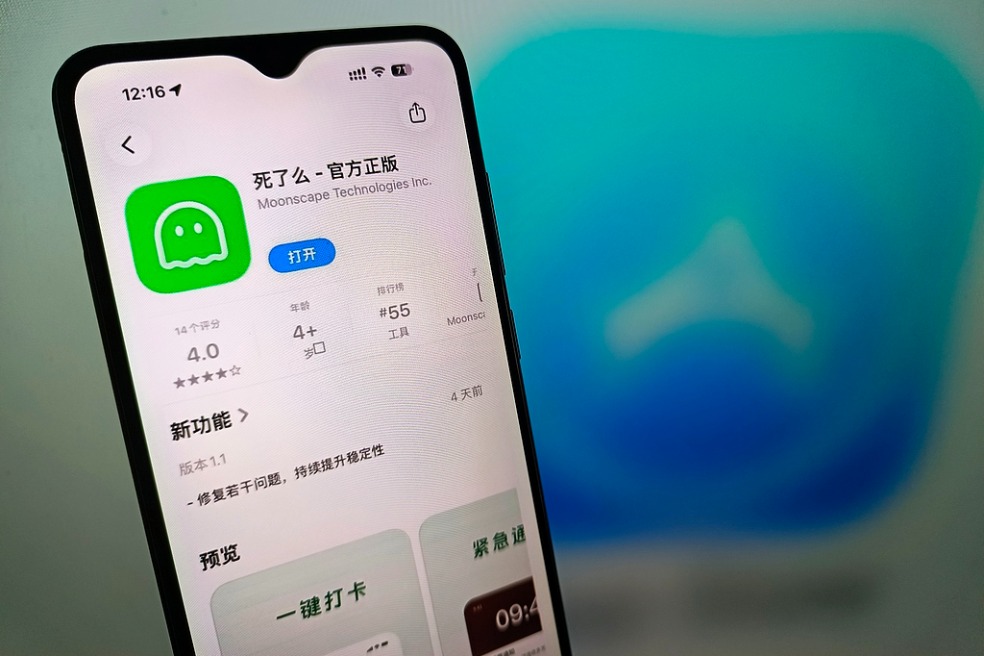
A minimalist mobile application named ‘Sileme’ – directly translated as ‘Are You Dead?’ – has unexpectedly surged to the top of China’s paid app charts, revealing deep-seated safety anxieties among the nation’s growing population of solo dwellers. Developed by three Generation Z creators in just one month, the application requires no personal data or login credentials – users simply tap a daily check-in button. Should they miss consecutive check-ins, the system automatically dispatches an email alert to a pre-designated emergency contact.
The app’s provocative title, far from being perceived as morbid, has resonated with thousands of young professionals like Li Wan, a 25-year-old from Shandong province. For Li, the service represents an 8-yuan ($1.14) investment in peace of mind. ‘I downloaded it because the name was amusing,’ she explained, noting it alleviates her mother’s concerns about her solitary living situation and enhances family communication.
This digital phenomenon underscores a significant demographic shift detailed in the 2025 China Statistical Yearbook, which reports single-person households now constitute approximately 20% of China’s sampled population. Projections from the Beike Research Institute suggest this demographic could expand to 150-200 million people by 2030.
Developer Guo, whose team recovered the app’s modest 1,000-yuan development cost shortly after launch, defends the blunt name as culturally significant. ‘The name is direct and reflects a shifting cultural attitude,’ Guo stated, observing that younger generations are becoming less hesitant about discussing mortality. Despite some user feedback requesting softer alternatives like ‘Are You Alive?’, the app’s user base has grown fifty-fold since its introduction, spawning several copycat applications.
Beyond digital solutions, communities are developing innovative safety nets. In Taiyuan, Shanxi province, elderly residents participate in a ‘curtain signal’ initiative where opening curtains each morning indicates they are safe. Meanwhile, on social platform Douban, female solo dwellers have formed mutual aid communities to exchange services like appliance repairs, avoiding the need to invite strangers into their homes.
Professor Wen Jun of East China Normal University’s social sciences department cautions that while apps like Sileme provide a valuable starting point, they are not comprehensive solutions. He advocates for stronger collaboration between government and local communities to establish an ‘online-offline synergy’ ensuring no one is left truly isolated during emergencies. As Sileme’s developers consider a potential name change in response to user feedback, the app continues to trend under its original, attention-grabbing title, symbolizing a broader technological response to urban solitude.