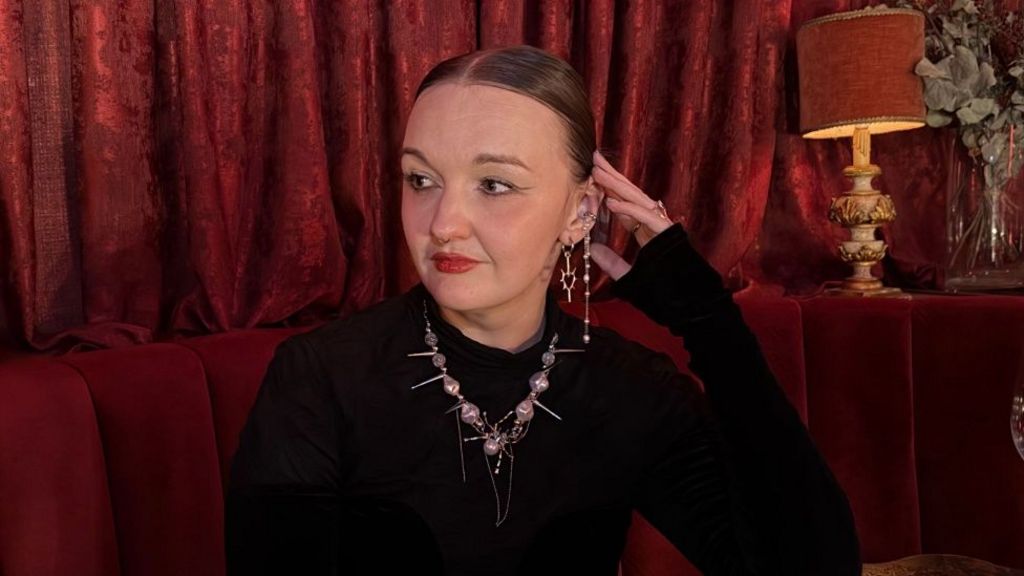
In the dim ambiance of a Kyiv wine bar on a Saturday evening, 34-year-old Daria scrolls through a dating app before dismissing it with palpable resignation. Having emerged from long-term relationships prior to the conflict, her romantic prospects have evaporated amid Ukraine’s protracted war. ‘I haven’t had a proper date since before the war,’ she confesses, encapsulating a nationwide phenomenon where personal connections have become collateral damage in the struggle for national survival.
Four years of relentless conflict have compelled Ukrainian society to reconfigure fundamental aspects of human existence, with relationships and reproductive choices now standing at the forefront of demographic concerns. With millions of women establishing new lives abroad since the 2022 invasion and hundreds of thousands of men either deployed or living overseas, those remaining face profoundly constrained options.
Khrystyna, a 28-year-old Lviv resident, observes the conspicuous absence of eligible men with mounting frustration. ‘Many, I would say most [men] are afraid to go out now,’ she notes, referencing conscription squads patrolling urban centers. The psychological toll on military personnel further complicates romantic prospects, as she explains: ‘Many are traumatized now because most of them – if they have returned – were in places where they experienced a lot.’
Daria conceptualizes the dating pool through three unsatisfactory categories: conscription-avoiders confined to their homes (‘not a person you want to build a relationship with’), soldiers engaged in sporadic long-distance relationships (‘you build a connection, then he leaves’), and men under conscription age who retain emigration options. None present viable foundations for meaningful partnerships.
Frontline perspectives reinforce this romantic impasse. Ruslan, serving in the Kharkiv region, questions what tangible offerings he can provide beyond ‘visits once or twice a year, flower deliveries and the odd phone call.’ Denys, a 31-year-old drone operator in eastern Ukraine, articulates the moral dilemma through a voice message: ‘Promising a wife or fiancée any long-term plans is difficult. Every day there is a risk of being killed or injured, and then all plans will, so to speak, go nowhere.’
The demographic consequences are both severe and quantifiable. Marriage rates have plummeted from 223,000 in 2022 to 150,000 in 2024, while fertility rates have reached a historic low of 0.9 children per woman—dramatically below the 2.1 replacement level and substantially beneath the EU average of 1.38. Combined with mass emigration (over six million departed since 2022) and elevated mortality, Ukraine faces what demographer Oleksandr Hladun of the National Academy of Sciences terms the ‘social catastrophe of war.’
Projections indicate a potential population collapse to 25.2 million by 2051—less than half the 1992 figure—with war-induced stress creating fertility complications that may persist for generations. Dr. Liubov Mykhailyshyn, a gynecologist in Lviv, expresses concern about ‘years of chronic stress and sleepless nights’ affecting reproductive health, creating ripple effects that will impact birth rates for years to come.
Even determined couples confront overwhelming obstacles. Olena, a 33-year-old policewoman and military instructor, undergoes fertility treatments while acknowledging the precarious timing: ‘taking into account my work and the situation in the country.’ She reflects on the transformational impact of the invasion: ‘During the first year of the war, it felt as if everything had stopped. Everything we were striving for – building a home, planning children – nothing mattered anymore.’
Government initiatives addressing childcare and housing affordability have achieved limited traction due to decentralized implementation. Hladun concedes that policy solutions remain ineffective while ‘would-be mothers and children remain exposed to the dangers of war.’ Demographic recovery would require the return of a substantial proportion of the 6.5 million Ukrainians abroad, yet repatriation remains uncertain even after hostilities cease.
The demographic crisis transcends social concerns to become a national security issue. Hladun frames the population decline within strategic parameters: ‘Russia is simply demographically much larger. And in this sense, it has more resources for war.’ This perspective transforms family planning into geopolitical calculus, where personal choices accumulate into national consequences.
For ordinary Ukrainians, the psychological adaptation proves as challenging as the practical circumstances. Daria summarizes the collective resignation: ‘Planning a future feels fragile, almost naive. This uncertainty is painful, but it becomes a part of everyday life. I’ve come to accept that I might stay alone not because I want to, but because war reshapes what feels possible. Learning to live with that is, in itself, a form of survival.’