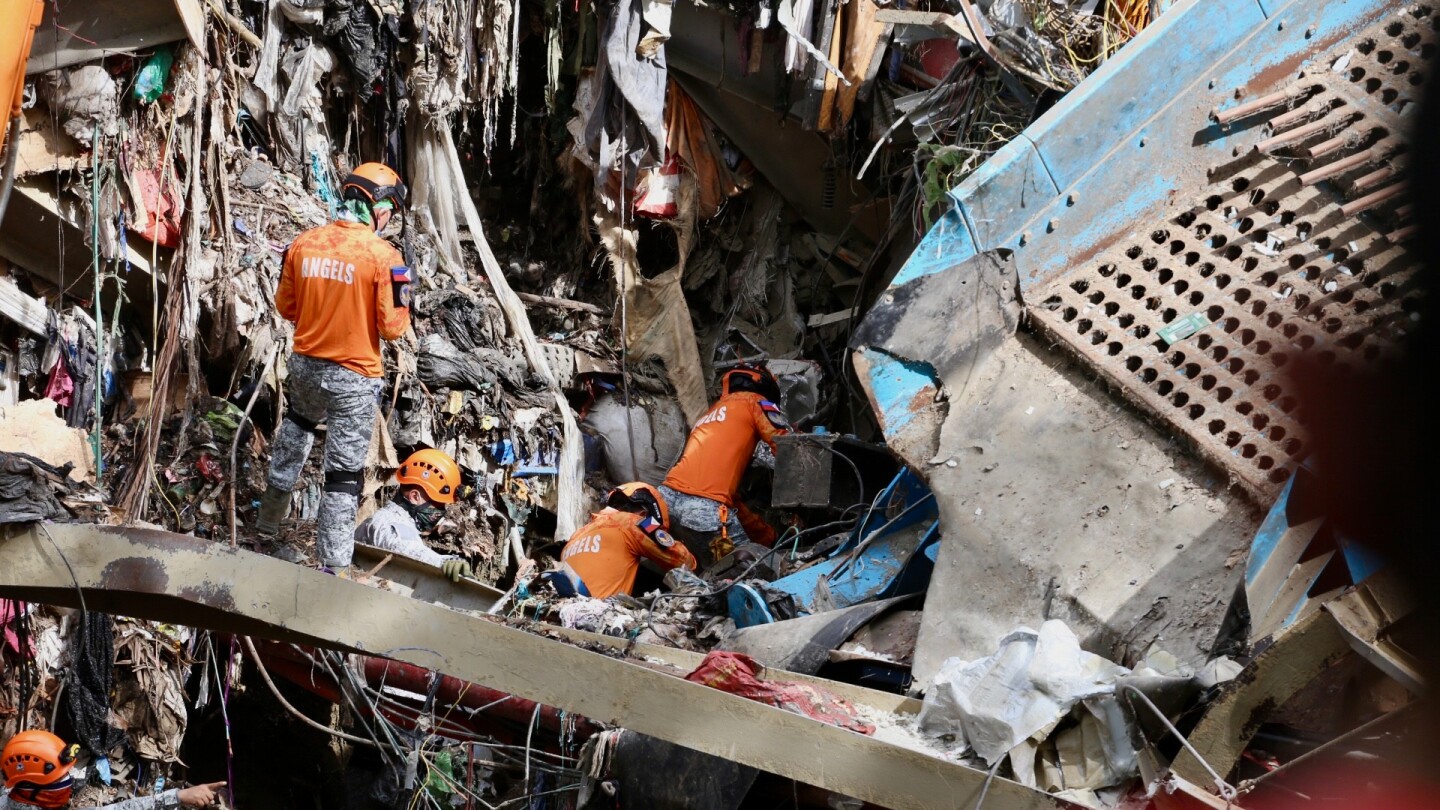
CEBU CITY, Philippines — Search and rescue teams have detected signs of life within the rubble of a catastrophic garbage avalanche that engulfed a waste management facility in central Philippines, offering hope amid a devastating incident that has claimed at least four lives and left dozens missing.
The tragedy occurred Thursday at the Binaliw village landfill in Cebu City when a massive wall of refuse collapsed without warning, burying low-lying structures under tons of debris. Despite favorable weather conditions, the sudden collapse trapped numerous workers beneath twisted metal roofing, iron supports, and highly combustible waste materials.
Authorities confirmed Saturday that twelve workers have been successfully extracted with various injuries while emergency crews continue their painstaking search for more than thirty missing individuals. Cebu City Mayor Nestor Archival announced that specialized equipment, including a 50-ton crane accompanied by police escort, is being deployed to assist in the delicate excavation process.
‘Safety protocols have been intensified due to multiple hazards including structural instability and acetylene exposure risks,’ Mayor Archival stated. ‘We’ve established controlled access points to protect responders while maintaining search operations in areas where life signs have been detected.’
Victims identified so far include both facility staff and office workers from the 110-employee complex. The death toll rose from two to four between Friday and Saturday, though official numbers of missing persons remain fluid as rescue efforts continue.
Survivor Jaylord Antigua, 31, described the terrifying moment of collapse to Associated Press reporters. ‘The garbage wall descended without any warning despite clear weather,’ recounted Antigua, who escaped with minor bruises after crawling through darkness toward a light source. ‘I moved quickly, fearing subsequent landslides—it was profoundly traumatic. This feels like a second life.’
The incident raises serious concerns about waste management infrastructure throughout the Philippines, where landfills and open dumpsites have historically posed significant public health and safety risks, particularly to adjacent impoverished communities where residents often scavenge for recyclables and food remnants.
This tragedy echoes a similar 2000 disaster in Quezon City where a garbage mound collapse during stormy conditions resulted in over 200 fatalities and prompted nationwide reforms in waste management policy. Mayor Archival acknowledged that preparations are underway to address impending garbage collection challenges resulting from the facility’s closure.