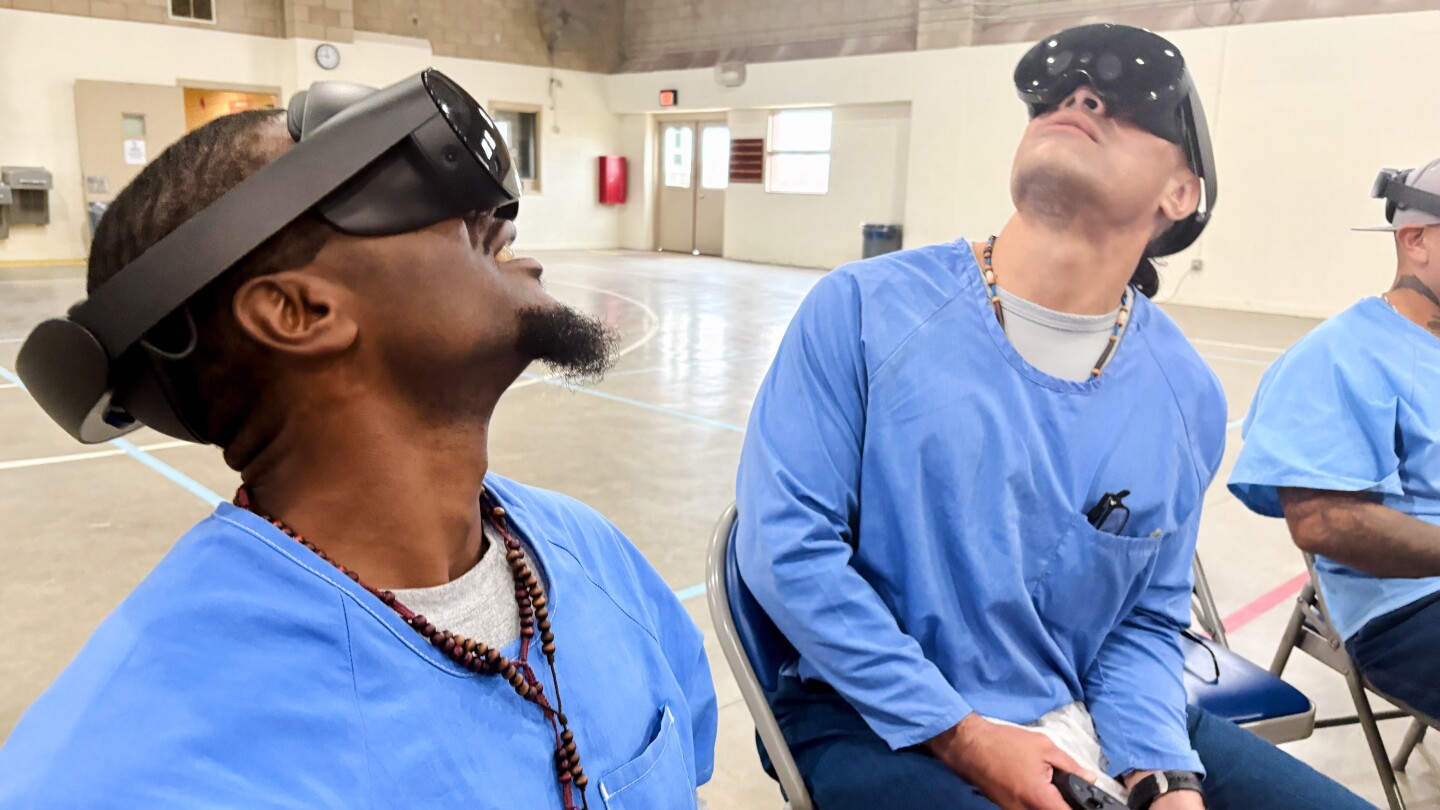
A groundbreaking virtual reality initiative is revolutionizing rehabilitation within California’s correctional system, offering incarcerated individuals both psychological respite and practical skills for societal reintegration. Spearheaded by Los Angeles-based nonprofit Creative Acts, the program utilizes Meta-donated Oculus headsets to transport inmates to diverse environments ranging from Thailand’s vibrant markets to simulated job interview settings.
At Valley State Prison near Fresno, participants like Jacob Smith—who has served twenty years—experience transformative journeys through VR technology. ‘I went to Thailand, man!’ Smith exclaimed, describing his first immersive encounter with Southeast Asian landscapes. Beyond providing temporary escape, the program specifically designs scenarios addressing real-world challenges former inmates will face, including employment interviews, civic procedures, and everyday tasks like using ATMs or public transportation.
Founder Sabra Williams characterizes the VR devices as ‘hope machines,’ evolving from her previous prison arts projects. The program now includes 100 headsets deployed across four California prisons, serving both general populations and solitary confinement units three times annually. Post-experience debriefing sessions help process emergent emotions and traumas, with volunteers like former inmate Richard Richard guiding participants through their psychological responses.
Criminal justice experts recognize the program’s dual benefits. Nancy La Vigne of Rutgers-Newark School notes VR’s potential for reducing aggression through nature exposure while preparing long-incarcerated individuals for technological changes. The California Department of Corrections officially endorses these innovative approaches, acknowledging VR’s capacity to ‘heal trauma, regulate emotional response, and prepare for safe, successful reentry.’
For many participants, the experience proves profoundly emotional. Williams recounts numerous instances of inmates removing headsets in tears, expressing awe that ‘I never knew the world was so beautiful.’ As the program expands, it represents a significant advancement in correctional rehabilitation methodologies, blending technological innovation with psychological support to address recidivism and prisoner welfare.