At an elevation of 5,373 meters where water boils at just 60°C and oxygen remains perpetually scarce, the Pumaqangtang border station in China’s Xizang Autonomous Region stands as the nation’s highest and most formidable policing outpost. This remote Himalayan location, bordering Bhutan, has earned the ominous designation as a ‘forbidden zone for life’ due to its punishing environmental conditions characterized by perpetual ice sheets and severely thin air.
Despite these extreme challenges, three pioneering female officers have not only survived but thrived at this austere post. Wu Hui, 27, first conceived the ambition to serve at this extreme elevation while graduating from police training academy. ‘Don’t you want to push your limits?’ she challenged her contemporaries. ‘Don’t you think it would be cool to work at the roof of the world?’
Her persuasive enthusiasm proved contagious. In February 2024, Wu successfully recruited two fellow graduates—29-year-old Li Tianjiao and 25-year-old Li Hongyan—to volunteer for assignment at the remote station. Their deployment marked a historic milestone as the first female officers to serve at the outpost since its establishment in 2012.
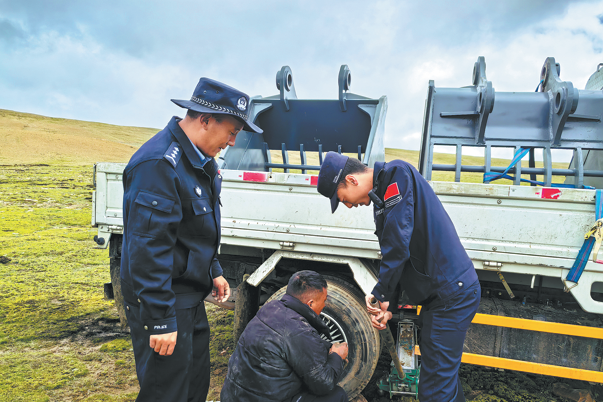
The officers’ duties extend far beyond conventional policing, encompassing high-altitude patrols, community assistance, and emergency response in one of Earth’s most inhospitable environments. Photographic evidence from August depicts officers from the station performing tire changes for Tibetan herders during rescue operations, demonstrating their integral role in supporting local communities amid extreme climatic challenges.
Their groundbreaking service at this altitude represents both a personal triumph over physical limitations and a symbolic advancement in gender equality within China’s border security forces, proving that determination and professionalism can overcome even the most daunting environmental barriers.