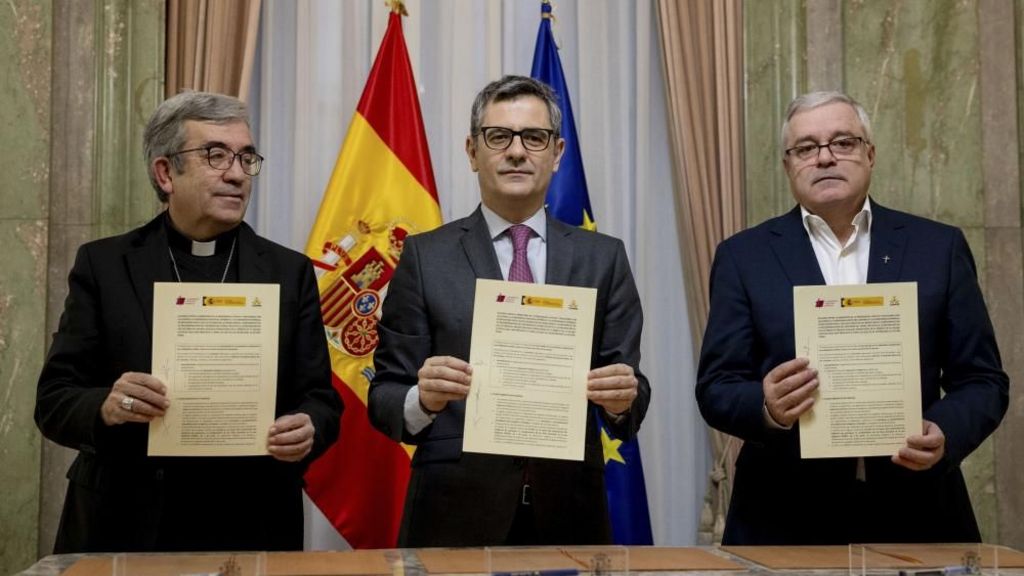
In a historic move addressing decades of institutional failure, Spain’s government and Roman Catholic Church leadership have established a groundbreaking cooperative framework to provide compensation for victims of clergy sexual abuse. This unprecedented agreement creates a state-managed pathway for victims to seek reparations even when legal avenues are unavailable due to expired statutes of limitations or deceased perpetrators.
The accord, signed by Justice Minister Félix Bolaños and Church representatives including Episcopal Conference President Luis Argüello, represents a significant shift from the Church’s previous independent handling of abuse cases. Under the new system, victims will submit claims to a specialized agency within the justice ministry, which will then forward cases to the ombudsman’s office for evaluation and reparation proposals. The Church must accept these proposals or return them for reconsideration.
This development follows mounting pressure from victims’ organizations and international scrutiny from the Vatican. A comprehensive 2023 study by Spain’s ombudsman estimated that approximately 440,000 Spaniards—1.1% of the population—had suffered sexual abuse by clergy or Church-affiliated individuals, though the Church has contested these figures.
The agreement acknowledges multiple forms of reparation, including symbolic gestures, psychological support, and financial compensation. While specific monetary amounts remain undefined, the ombudsman has suggested benchmarking against European standards, where payments have ranged from €6,000 in Belgium to approximately €63,000 in Ireland.
The initiative comes after years of criticism regarding the Church’s handling of abuse cases. Its internal reparations scheme, established in 2023, had resolved only 58 cases by November and faced accusations of opacity and exclusion of victim input. Last June, several victims’ groups severed ties with the Spanish Church, alleging systematic exclusion from reparations processes.
This Spanish agreement aligns with global patterns of addressing clerical abuse, following major scandals that emerged initially in North America during the 1980s and subsequently across numerous Catholic-majority nations. While Spain experienced relatively fewer public scandals initially, recent investigations and high-profile cases—including the November resignation of Cádiz bishop Rafael Zornoza over abuse allegations—have brought the issue to national prominence.
Victims’ advocates have welcomed the agreement as a crucial step toward accountability. Juan Cuatrecasas of the Association for Stolen Childhood described the arrangement as addressing ‘an endemic, structural evil’ within the Church that required institutional acknowledgment rather than continued concealment.