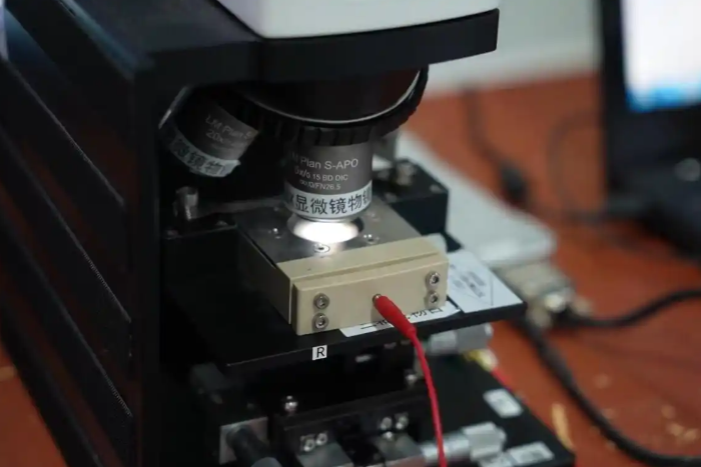
In a groundbreaking orbital experiment, astronauts aboard China’s Tiangong space station have successfully completed pioneering research examining how microgravity conditions affect the internal performance mechanisms of lithium-ion batteries. The Chinese Academy of Sciences’ Dalian Institute of Chemical Physics confirmed the completion of this innovative study on Wednesday.
The research initiative, spearheaded by payload specialist Zhang Hongzhang of the Shenzhou XXI mission crew, leveraged his specialized expertise to execute complex technical operations in the unique space environment. The experiment represents a significant advancement in understanding electrochemical processes free from Earth’s gravitational influences.
Unlike terrestrial laboratories where gravity constantly interacts with electric fields, the microgravity environment of space provides scientists with unprecedented opportunities to observe fundamental battery processes in isolation. The research specifically investigated ion transport mechanisms, insertion dynamics, and extraction processes without gravitational interference that typically complicates ground-based experiments.
Zhang conducted real-time monitoring and captured detailed optical observations of lithium dendrite formation—microscopic, needle-like structures that pose significant safety risks by potentially causing short circuits in battery systems. His work documented the full progression of these phenomena through comprehensive imaging techniques.
The findings are expected to overcome critical knowledge gaps regarding coupled gravity-electric field effects and provide foundational data for enhancing current spacecraft energy systems. This research holds particular importance for developing next-generation space batteries with improved energy capacity, extended service life, and enhanced safety protocols for future space missions.
Lithium-ion batteries remain indispensable for modern space exploration due to their high energy density, reliability, and longevity. This experiment addresses growing scientific interest in microscopic electrochemical mechanisms, particularly how chemical distribution within electrolytes affects power output and operational lifespan in space environments.