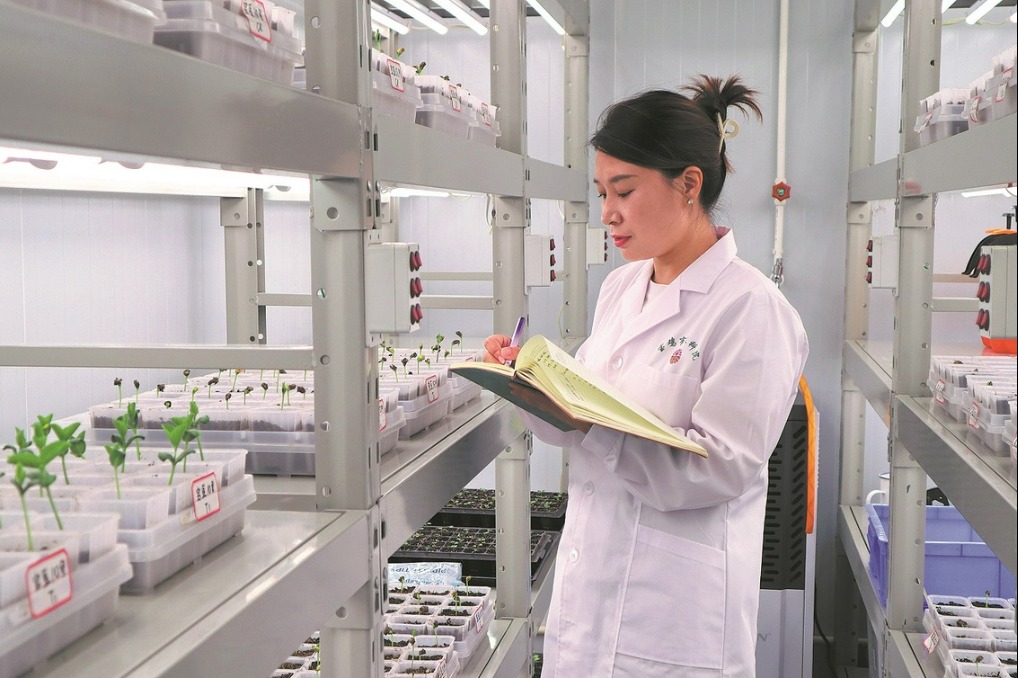
In the shadow of the Qinling Mountains, a quiet agricultural transformation is underway where microscopic plant tissues and genetic sequencing are replacing traditional farming methods as the primary drivers of increased productivity. Baoji, a prefecture-level city in Shaanxi province, has emerged as an unexpected epicenter of agricultural innovation through its pioneering application of advanced biotechnologies.
The Baoji Academy of Agricultural Sciences serves as the nerve center for this revolution, where scientists employ cutting-edge techniques including molecular breeding, CRISPR gene editing, and shoot tip detoxification to develop superior crop varieties. In one laboratory, researchers meticulously dissect plant shoot tips measuring less than half a millimeter—a process that eliminates viral infections and can boost yields by up to 30%.
Agricultural scientist Du Xueshi exemplifies this new approach, examining tomato seedlings for genetic markers that confer resistance to the devastating yellow leaf curl virus. ‘We’re essentially conducting genetic identification to ensure only the most resilient plants reach our fields,’ Du explained.
The practical benefits are already transforming local agriculture. Farmer Tie Hongke reported that soybean yields in Qishan County have dramatically increased from approximately 135 kilograms per half hectare to 275 kilograms using the locally developed Baodou No. 10 variety—a high-protein strain containing 43% protein content that commands premium prices from food processors.
Additional breakthroughs include the Baodou 1519 soybean variety, which has achieved record yields of 302 kilograms per mu (0.066 hectares), and the Qinshu 13 sweet potato strain that produces up to 6,000 kilograms per mu. A newly developed short-vine sweet potato variety enables full mechanical harvesting, significantly reducing labor requirements.
These innovations have reduced breeding cycles from over a decade to just seven or eight years through molecular techniques. In rapeseed research, scientists now cultivate stable lines from single microspores in as little as three years.
Baoji’s agricultural output has surged from 31.7 billion yuan in 2019 to 42 billion yuan in 2024—a 32% increase largely attributed to scientific advancements. The city has become China’s largest production base for premium kiwifruit and dwarf apple trees, while simultaneously developing as a major center for alpine vegetables and dairy production.
The city’s biotechnology laboratory—the first of its kind in Shaanxi—operates six breeding units capable of producing three to four crop generations annually. The academy’s germplasm bank now preserves over 4,400 plant samples, each representing potential future breakthroughs.
This scientific approach aligns with national policy directives emerging from the Fourth Plenary Session of the 20th CPC Central Committee, which emphasized accelerating agricultural modernization through technological innovation. The Ministry of Agriculture and Rural Affairs has specifically endorsed developing ‘new quality productive forces’ in farming, including bio-breeding, agricultural drones, artificial intelligence, and digital management systems.
Wang Zhouyu, president of the Baoji Academy of Agricultural Sciences, summarized the mission: ‘Our objective remains straightforward—to cultivate better crops and put more smiles on farmers’ faces.’ As China pursues agricultural modernization, Baoji’s integration of laboratory science with practical farming applications offers a replicable model for enhancing food security through innovation.