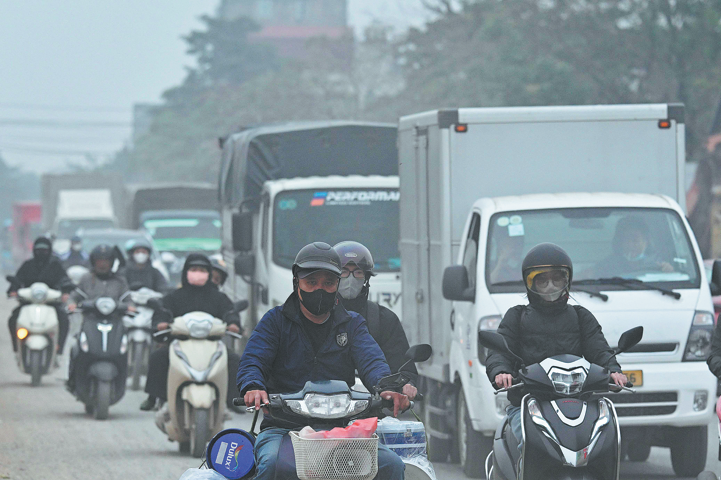
Hanoi is grappling with a severe air pollution emergency as the Vietnamese capital registered among the world’s worst air quality levels this week. On December 10th, the city’s Air Quality Index (AQI) soared to 223, catapulting Hanoi to the third most polluted city globally according to IQAir’s real-time measurements.
The hazardous conditions have persisted for several days, with thick smog laden with fine particulate matter enveloping the city. Monitoring systems from the Ministry of Agriculture and Environment confirmed multiple locations had reached the ‘purple zone’ threshold—classified as very unhealthy—prompting serious health concerns among the city’s residents.
Environmental officials attribute the crisis to a convergence of factors. Le Thanh Thuy, Deputy Head of Hanoi’s Environmental Management Division, cited year-end urban upgrading projects, chronic traffic congestion, increased transportation of construction materials, and widespread open burning of waste and agricultural by-products as primary contributors. ‘The weather conditions have not been favorable while many activities peak at the end of the year, placing enormous pressure on Hanoi,’ Thuy noted.
Experts emphasize that the pollution problem extends beyond city limits. Hoang Duong Tung, Chairman of the Vietnam Clean Air Network, identified neighboring provinces including Bac Ninh, Ninh Binh and Hung Yen as significant pollution sources affecting the capital region. Tung advocated for implementing artificial intelligence to validate, clean, and synchronize air quality data, stating that ‘only with accurate, transparent, real-time data can we build appropriate scenarios and policies.’
In response to the escalating crisis, Vietnam’s National Assembly approved a Resolution addressing environmental protection policies. The comprehensive plan mandates urgent action to improve air quality in Hanoi and Ho Chi Minh City during 2025-2026, establishing specific targets including a 20% reduction in average annual PM2.5 concentrations by 2030 compared to 2024 levels.
The Resolution outlines concrete measures including stricter vehicle emissions controls, limitations on highly polluting vehicles in urban centers, enhanced regulation of construction and transport waste, restrictions on agricultural burning, and expanded wastewater treatment systems. Additionally, lawmakers directed the creation of a national environmental information system featuring real-time public maps of environmental quality to support monitoring and early-warning efforts.