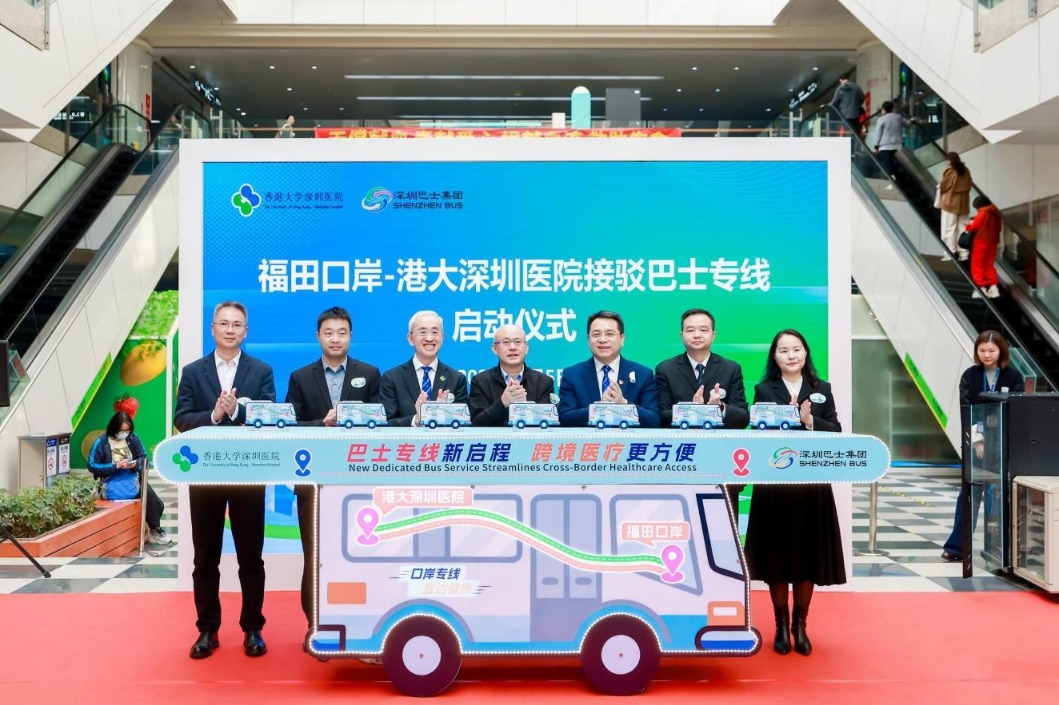
A new direct shuttle bus service connecting Futian Port and the University of Hong Kong-Shenzhen Hospital commenced operations on Monday, marking a significant advancement in cross-boundary medical integration between Hong Kong and mainland China. The transportation initiative addresses critical last-mile connectivity challenges for patients seeking specialized healthcare services at the pioneering medical institution.
The shuttle service will operate on a three-month trial basis, offering affordable transit at just 2 yuan ($0.28) per ride with complimentary service for seniors aged 60 and above. Operating daily from 8 am to 6 pm, the buses depart every 30 minutes with an approximate travel time of 30 minutes between destinations. Multiple payment options including cash and transportation cards ensure accessibility for all passengers.
Kenneth Cheung Man-chee, Chief Executive of HKU-Shenzhen Hospital, emphasized the institution’s role as a testing ground for cross-boundary medical cooperation. ‘We are systematically reducing barriers to medical integration through enhanced connectivity in medical talent, pharmaceuticals, equipment, payment systems, emergency transfers, and information sharing,’ Cheung stated.
The transportation solution arrives amid rapidly growing demand for northbound medical care among Hong Kong residents. Patient testimonials highlight the service’s practical benefits: Hong Kong resident Mr. Ho noted that while taxi fares between the port and hospital typically range from 20-40 yuan, and metro travel requires two transfers, the direct bus offers both affordability and convenience—particularly crucial for chronic disease patients requiring frequent visits.
Mainland patient Brian Zhong, who accompanies his mother monthly for osteoporosis treatment, highlighted additional advantages: ‘This streamlined connection enables mainland patients to conveniently continue to Hong Kong for family visits or tourism after medical appointments,’ reflecting the service’s role in deepening people-to-people exchanges.
The hospital serves as a critical access point for medications approved in Hong Kong but not yet available on the mainland. As the pilot institution for multiple cross-boundary healthcare initiatives, it has facilitated the cross-boundary use of Hong Kong-approved drugs and medical devices, plus healthcare voucher programs for Hong Kong seniors—recording 140,000 voucher transactions by the end of 2025.
Statistical evidence confirms the growing trend: over 22% of the hospital’s outpatients are Hong Kong residents, with University of Hong Kong research from August 2025 showing a dramatic increase in border-crossing medical visits. While only 5.9% of Hong Kong residents sought medical care on the mainland before 2011, this figure surged to 60% between 2019 and 2023. The drug and medical device program has now expanded to 71 medical institutions across Guangdong province.