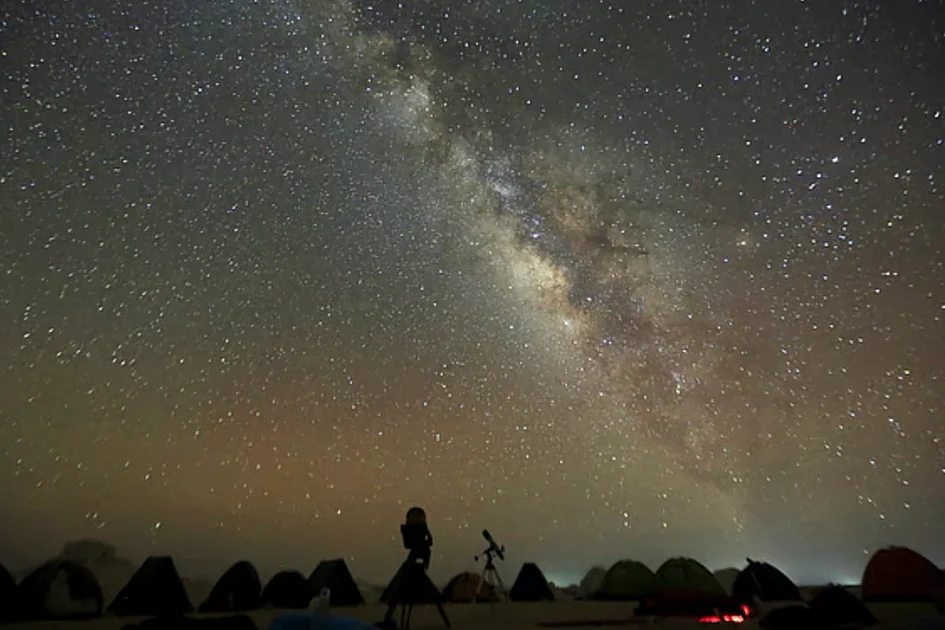
The United Arab Emirates is poised for an extraordinary year of astronomical events throughout 2026, with multiple supermoons and prolific meteor showers set to grace the night skies. This celestial spectacle offers both amateur stargazers and professional astronomers unprecedented opportunities for cosmic observation.
The year commences with the Wolf Supermoon on January 3rd, coinciding strategically with the peak of the Quadrantids meteor shower. This dual phenomenon creates a remarkable viewing opportunity, though the supermoon’s brightness may partially obscure the meteor display.
A particularly noteworthy event occurs on May 31st with the appearance of a Blue Micromoon. Contrary to its nomenclature, this phenomenon doesn’t manifest with blue coloration but represents the second full moon within a single calendar month. This micromoon will appear marginally smaller and less luminous than typical full moons due to its orbital positioning at apogee—the farthest point from Earth in its elliptical path.
The lunar exhibitions continue with the Beaver Supermoon emerging after a ten-month interval, followed by the Cold Supermoon in December. The latter event holds special significance as it will be the closest lunar approach to Earth since 2019, resulting in the year’s most brilliant full moon presentation.
The meteor shower calendar features several highlight events:
The Quadrantids (January 3-4) initiate the celestial schedule with an impressive rate of 120 meteors hourly, best observed during pre-dawn hours.
The Lyrids (April 22-23) offer a more modest display of 15-20 meteors hourly but occasionally produce spectacular fireballs surpassing Venus in luminosity.
The Perseids (August 12-13) provide one of the most reliable and popular meteor displays with approximately 100 meteors hourly during summer nights.
The Geminids (December 13-14) conclude the annual meteor schedule with the most intense performance, generating 120-150 multicolored meteors hourly and frequently producing brilliant fireballs.
Additional meteor showers including the Orionids (October 21-22) and Leonids (November 17-18) will further enhance the year’s astronomical offerings, ensuring consistent celestial entertainment for UAE residents and visitors alike.