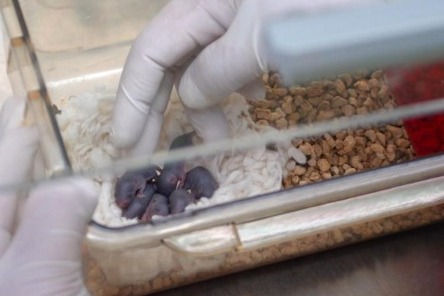
In a groundbreaking achievement for space biology, Chinese scientists have announced the successful birth of healthy mouse pups following a mammalian reproduction experiment aboard China’s space station. The breakthrough results from a carefully orchestrated mission involving four mice launched aboard the Shenzhou-21 crewed spacecraft on October 31.
The rodents spent approximately two weeks in orbit within a specialized habitat module on China’s Tiangong space station before returning to Earth on November 14. Remarkably, one female mouse conceived after her return to terrestrial conditions and delivered nine offspring on December 10. Six of the newborns have survived—a survival rate researchers consider normal for laboratory conditions—with both mother and pups exhibiting healthy development and normal nursing behavior.
Dr. Wang Hongmei, a researcher at the Institute of Zoology of the Chinese Academy of Sciences, emphasized the significance of these findings: ‘This mission demonstrated that short-term space travel does not impair the reproductive capability of mice. It provides invaluable biological samples for investigating how the space environment influences early developmental stages in mammals.’
The mission encountered unexpected challenges when schedule changes for the Shenzhou-20 spacecraft created a critical food shortage for the orbital rodents. Ground teams implemented emergency protocols, with astronauts aboard the space station providing water through dedicated habitat ports. After evaluating various alternatives from the astronauts’ food supplies, scientists determined soybean milk could serve as a nutritionally adequate temporary substitute following ground-based verification tests.
Throughout the mission, an artificial intelligence monitoring system continuously tracked the mice’s behavioral patterns—including movement, feeding, and sleep cycles—providing essential data to support real-time decision-making during the contingency operation.
This achievement represents China’s first complete mammalian space experiment cycle, encompassing pre-launch preparations, in-orbit operations, and successful sample recovery. The pioneering research establishes a crucial foundation for more complex biological studies in space, potentially informing future human reproduction considerations for long-duration spaceflight and extraterrestrial colonization.
Scientists will continue monitoring the postnatal development of the space-travel-derived mouse pups, observing their growth patterns and physiological changes. Subsequent research may investigate whether these offspring can reproduce normally, potentially revealing multigenerational effects of space exposure on mammalian biology.