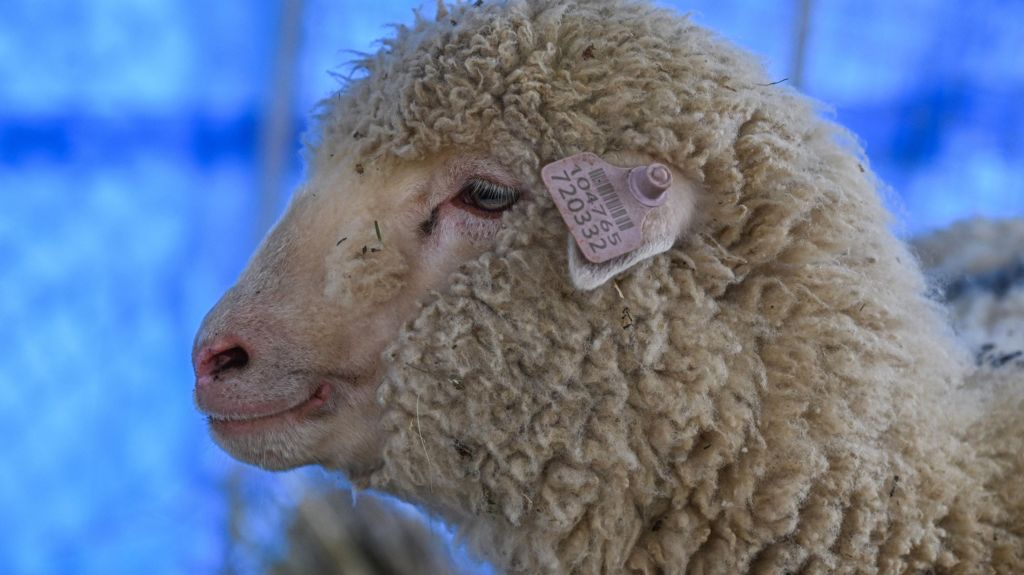
In a landmark achievement for Indian genetic research, the nation’s inaugural gene-edited sheep has successfully reached its first year of development. The animal, named Tarmeem (Arabic for ‘modification’), was born on December 16, 2024, at Sher-e-Kashmir Agricultural University in Srinagar, Indian-administered Kashmir, where it resides under controlled conditions alongside its non-edited twin sister.
The research team employed CRISPR-Cas9 technology—a revolutionary gene-editing system—to precisely modify the myostatin gene, which naturally limits muscle development in mammals. Dr. Suhail Magray, a key researcher on the project, explained the process: ‘We extracted embryos from pregnant sheep and performed targeted gene editing before transferring them to foster recipients. After 150 days of gestation, the edited lambs were born.’
Professor Riaz Shah, dean of veterinary sciences and principal investigator, reported that Tarmeem demonstrates normal physiological development with a notable 10% increase in muscle mass compared to its non-edited twin. ‘We anticipate further muscle development as the animal matures,’ Shah noted, adding that the team has implemented rigorous monitoring protocols to evaluate long-term health outcomes.
This breakthrough culminates seven years of dedicated research by an eight-member team that initially faced significant challenges. The researchers attempted multiple strategies before achieving success in December 2024, with only one successful gene-editing outcome from five live births following seven IVF procedures.
The scientific community highlights the potential agricultural implications of this advancement. Professor Nazir Ahmad Ganai, the university’s vice-chancellor, emphasized that gene-editing could address Kashmir’s substantial mutton deficit—the region consumes approximately 60,000 tonnes annually while producing only half that amount. ‘By increasing body weight by up to 30%, this technology could enable more efficient meat production with fewer animals,’ Ganai explained.
While CRISPR technology—co-developed by Nobel laureates Emmanuelle Charpentier and Jennifer Doudna—has revolutionized medical research globally, its application in agriculture remains subject to regulatory scrutiny. The Indian research team has submitted proposals for government funding and approval to scale this technology for broader agricultural implementation.
Globally, nations including Argentina, Australia, Brazil, Japan, and the United States have already incorporated gene-edited animals and crops into their agricultural systems. The United Kingdom is poised to permit gene-edited foods beginning next year, while the European Union recently moved to reduce regulatory barriers for such products.
Despite ethical debates surrounding genetic modification, scientists distinguish between gene editing (modifying existing genes) and genetic modification (introducing foreign genes). As India evaluates whether to classify Tarmeem as a natural genetic variant, researchers remain optimistic about CRISPR’s potential to transform sustainable food production nationwide.