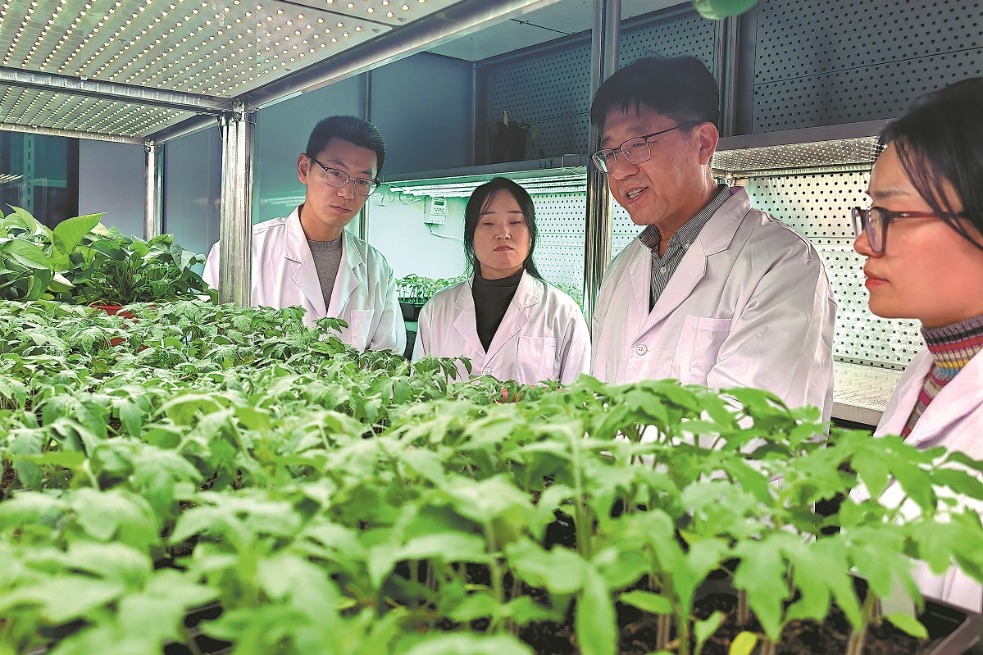
Professor Li Chuanyou, a distinguished plant molecular biologist from Shandong Agricultural University, has been honored with the prestigious Humboldt Research Award in recognition of his lifetime contributions to understanding plant defense and regeneration mechanisms. The award celebrates his four decades of pioneering research that has fundamentally changed our understanding of how plants communicate, defend against threats, and repair damage.
Growing up in China’s agricultural heartland of Shandong province, Li developed an early fascination with plant growth that would shape his entire career. After obtaining his master’s degree in crop genetics and breeding from Shandong Agricultural University in 1994, he began his academic journey as both teacher and researcher at the same institution.
Li’s most significant breakthrough came during his postdoctoral research at Michigan State University (1999-2003), where he challenged existing scientific consensus about plant defense signaling. While scientists had believed since the 1970s that a substance called systemin served as the primary alarm signal when plants were injured, Li demonstrated that jasmonic acid actually functioned as the long-distance mobile alarm signal, with systemin acting merely as an ‘alarm amplifier’ at the injury site.
This discovery, hailed by the journal Science in 2002 as a major breakthrough in plant and microbe signal transduction, represented just the beginning of Li’s contributions. He subsequently led a decade-long investigation into how plants achieve tissue regeneration without the ability to escape harm. Through meticulous examination of tens of thousands of mutant tomato variants, his team identified a key gene capable of activating stem cells to facilitate damaged tissue regrowth—findings published in the journal Cell last year.
Beyond his fundamental research, Li has spearheaded international collaborative efforts, working with over 300 scientists from 14 countries to sequence the complete genome of both cultivated tomatoes and their wild ancestors. This genomic mapping has provided crucial insights controlling plant growth, ripening, flavor, and firmness while enabling the development of disease-resistant varieties.
As dean of the College of Life Sciences, Li has translated his research into practical applications, developing more than 30 high-end tomato varieties that offer domestic alternatives to imported seeds. Through the Taishan Academy of Tomato Innovation—established in 2023 through a partnership between Shandong Agricultural University and Tai’an city—Li’s team continues to bridge fundamental research with molecular breeding and variety promotion.
Throughout his career, Li has maintained that research must ultimately ‘return to the land,’ serving farmers and bringing better food to people—a philosophy that has guided his work from laboratory discoveries to tangible agricultural improvements.