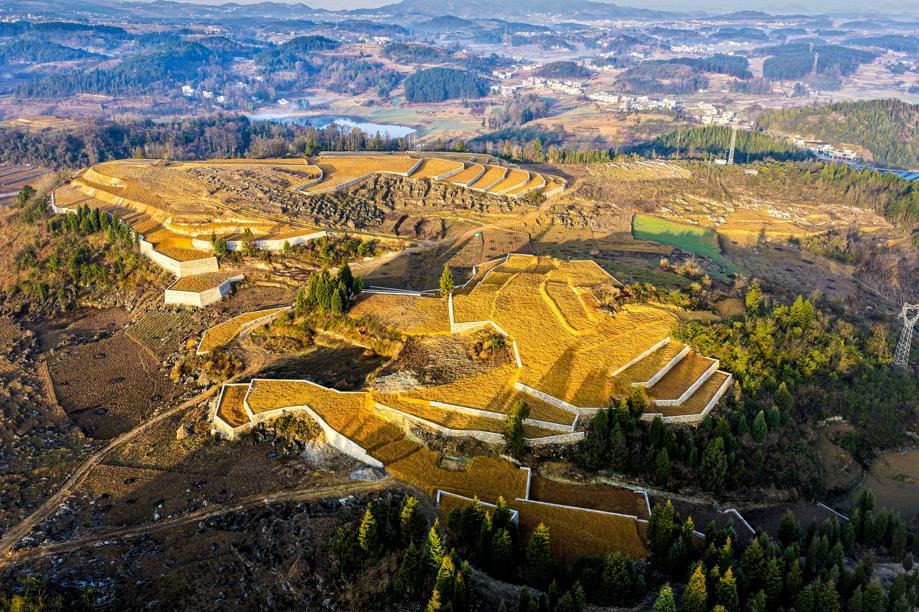
In a remarkable environmental transformation, China’s southwestern Guizhou province has successfully revitalized previously unproductive mountainous terrain through comprehensive land rehabilitation initiatives. Aerial photography from Qianxi county reveals the striking metamorphosis of fragmented, erosion-prone fields into neatly organized agricultural plots following systematic conservation efforts.
The challenging topography of this mountainous region had long suffered from severe runoff issues that consistently washed away vital water resources, nutrient-rich topsoil, and fertilizers, rendering extensive land areas practically unusable for cultivation. This persistent environmental degradation created significant agricultural limitations for local communities.
In response, regional authorities implemented an integrated approach to watershed management that has yielded dramatic results. The multi-faceted program included constructing engineered stone terraces to prevent soil displacement, establishing specialized forestry systems specifically designed for soil and water conservation, and implementing strategic land-closure measures to facilitate natural recovery processes.
These coordinated interventions have effectively reversed years of ecological decline, breathing new life into landscapes that had remained dormant and unproductive for extended periods. The successful regeneration represents a significant achievement in sustainable land management practices, demonstrating how targeted environmental policies can transform ecological challenges into agricultural opportunities.
The project’s success offers valuable insights into addressing similar land degradation issues in mountainous regions worldwide, showcasing practical solutions that balance ecological restoration with agricultural productivity. This transformation stands as a testament to the potential of coordinated conservation efforts to create sustainable farming environments where previously only barren slopes existed.