The Christian community in Gaza has announced the cancellation of public Christmas festivities for the third consecutive year, marking a solemn holiday season amidst ongoing conflict and humanitarian crisis. Youssef Tarazi, a 31-year-old Palestinian Christian, confirmed that the traditional giant Christmas tree in Gaza City will remain unlit this year, symbolizing the community’s collective mourning.
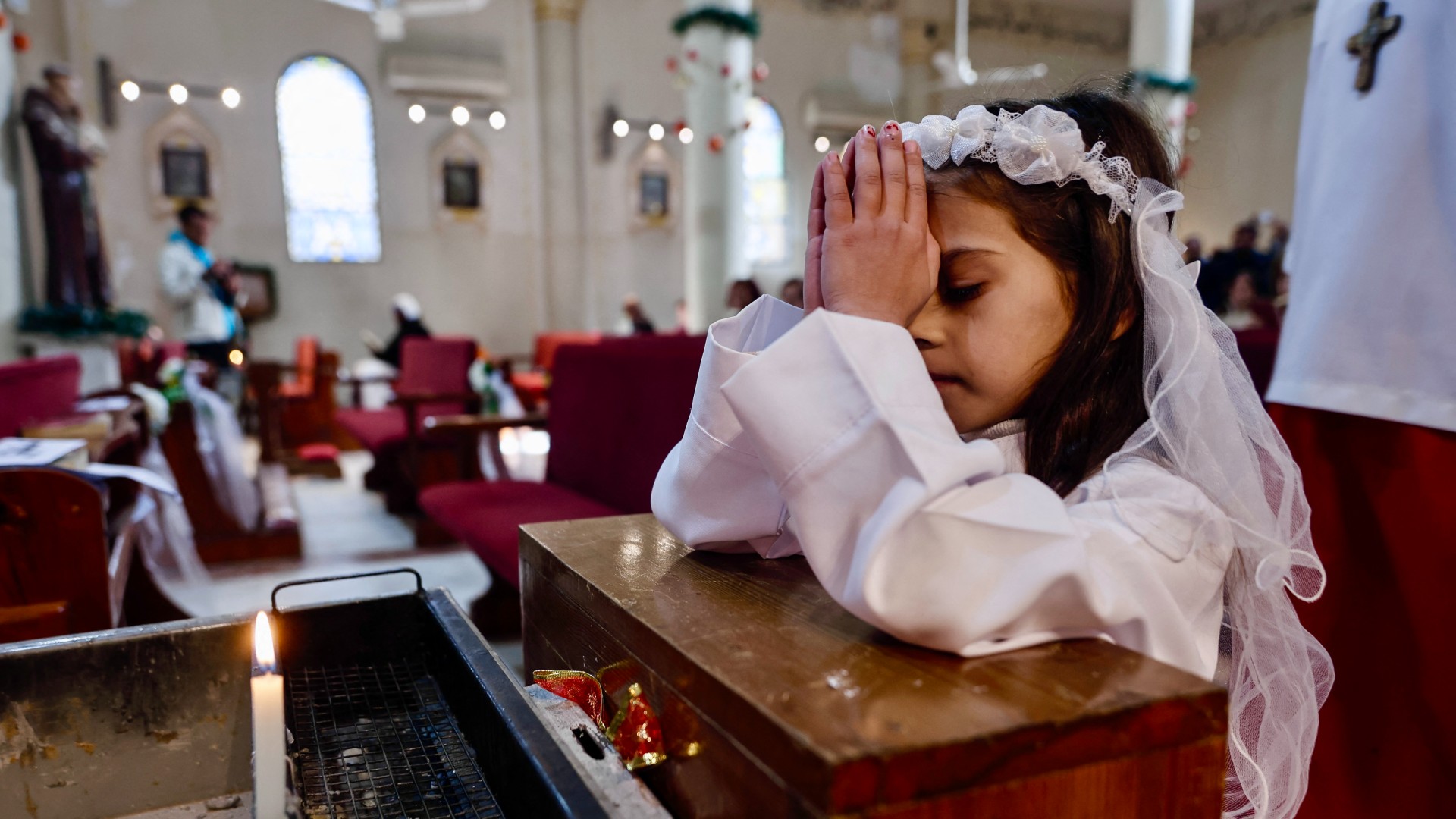
Church authorities have suspended all external celebrations, limiting observances to private prayers and indoor nativity scenes within church buildings. This decision reflects the profound grief shared across religious lines, with both Christians and Muslims experiencing devastating losses during the ongoing conflict.
George Anton, director of operations at the Latin patriarchate in Gaza, emphasized the impossibility of celebration while the community continues to suffer. ‘We cannot celebrate while Christians and Muslims alike are mourning devastating losses caused by the war,’ Anton stated. ‘For us, the war has not ended.’
The physical landscape of celebration has been fundamentally altered, with many homes and streets that once hosted festive gatherings now destroyed. Since October 2023, Israeli military operations have damaged or destroyed numerous Christian institutions, including three historic churches: the Church of Saint Porphyrius, the Holy Family Church, and the Gaza Baptist Church.
The human toll has been equally devastating, with at least 53 Christians killed directly or indirectly during the conflict. Many casualties resulted from airstrikes, while others died due to inaccessible medical care and medicine shortages, particularly affecting elderly community members with chronic illnesses.
Gaza’s Christian population has dwindled to approximately 580 people across 220 families—the smallest community in decades. Over 400 Christians have fled during the war, fearing for their safety after losing relatives and friends. Those remaining face deteriorating humanitarian conditions that may force additional families to seek medical care and stability elsewhere.
The community, comprising approximately 70% Greek Orthodox and 30% Latin Catholics, emphasizes their shared fate with Gaza’s Muslim majority. ‘We are part of this society,’ Anton noted, ‘and what happens to Gaza happens to us.’
Recent attacks on religious institutions have compounded the trauma, including an October 2023 strike on the ancient Church of Saint Porphyrius that killed 16 refugees and a July attack on Gaza’s only Catholic church that killed two women and injured several others.
As Gaza’s Christians prepare for a holiday season without traditional celebrations, they emphasize that their spiritual observance continues through prayer, even as their joy remains incomplete amid the ongoing humanitarian crisis and collective grief.