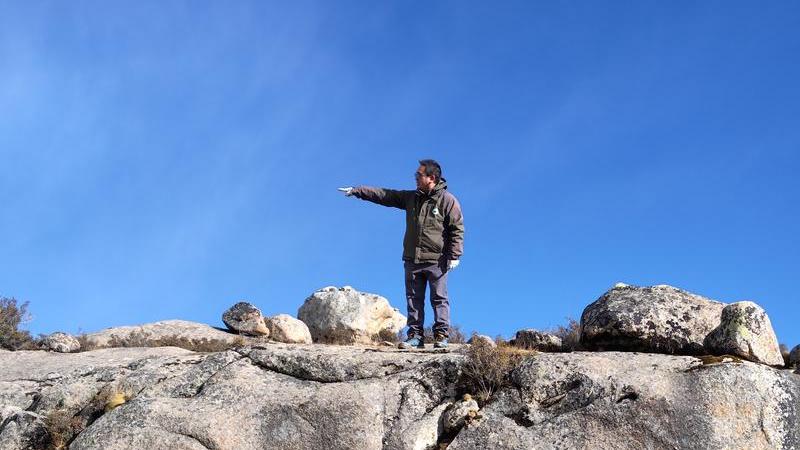
A groundbreaking archaeological discovery has reshaped our understanding of early human settlement patterns at extreme altitudes. Chinese researchers have unearthed a Paleolithic site dating back approximately 12,000 years near Tsochen Tso Lake in Daocheng county, located within Sichuan Province’s Garze Tibetan Autonomous Prefecture. This remarkable find sits at an elevation exceeding 4,300 meters—the highest-altitude evidence of ancient human activity ever documented on the Qinghai-Tibet Plateau.
The excavation, led by the Sichuan Provincial Cultural Heritage Administration, has yielded more than 190 meticulously crafted stone artifacts. These tools predominantly consist of small flake implements and microblades, demonstrating sophisticated knapping techniques and precision retouching that produced razor-sharp edges capable of processing animal hides and meat efficiently.
According to Zheng Zhexuan, head of the excavation team and director of the Paleolithic Archaeology Institute at the Sichuan Provincial Institute of Cultural Relics and Archaeology, this discovery forms a crucial component of the extensive Piluo site complex. This broader archaeological landscape, dating back over 200,000 years with an average altitude of 3,750 meters, represents the earliest, most expansive, and culturally richest known settlement on the plateau.
“This finding indicates that ancient human communities strategically capitalized on warmer climatic intervals to establish settlements alongside plateau lakes more than ten millennia ago,” Zheng explained. “The site demonstrates characteristics of a repeatedly occupied habitat rather than a temporary campsite, suggesting these early populations had developed sustainable adaptive capabilities for high-altitude environments.”
Ongoing multidisciplinary research at the Piluo site complex includes detailed chronology studies and environmental archaeology analyses. Scientists are working to reconstruct precise scenarios of daily life for these ancient plateau dwellers, potentially revealing new insights into human resilience and environmental adaptation strategies during the Paleolithic era.