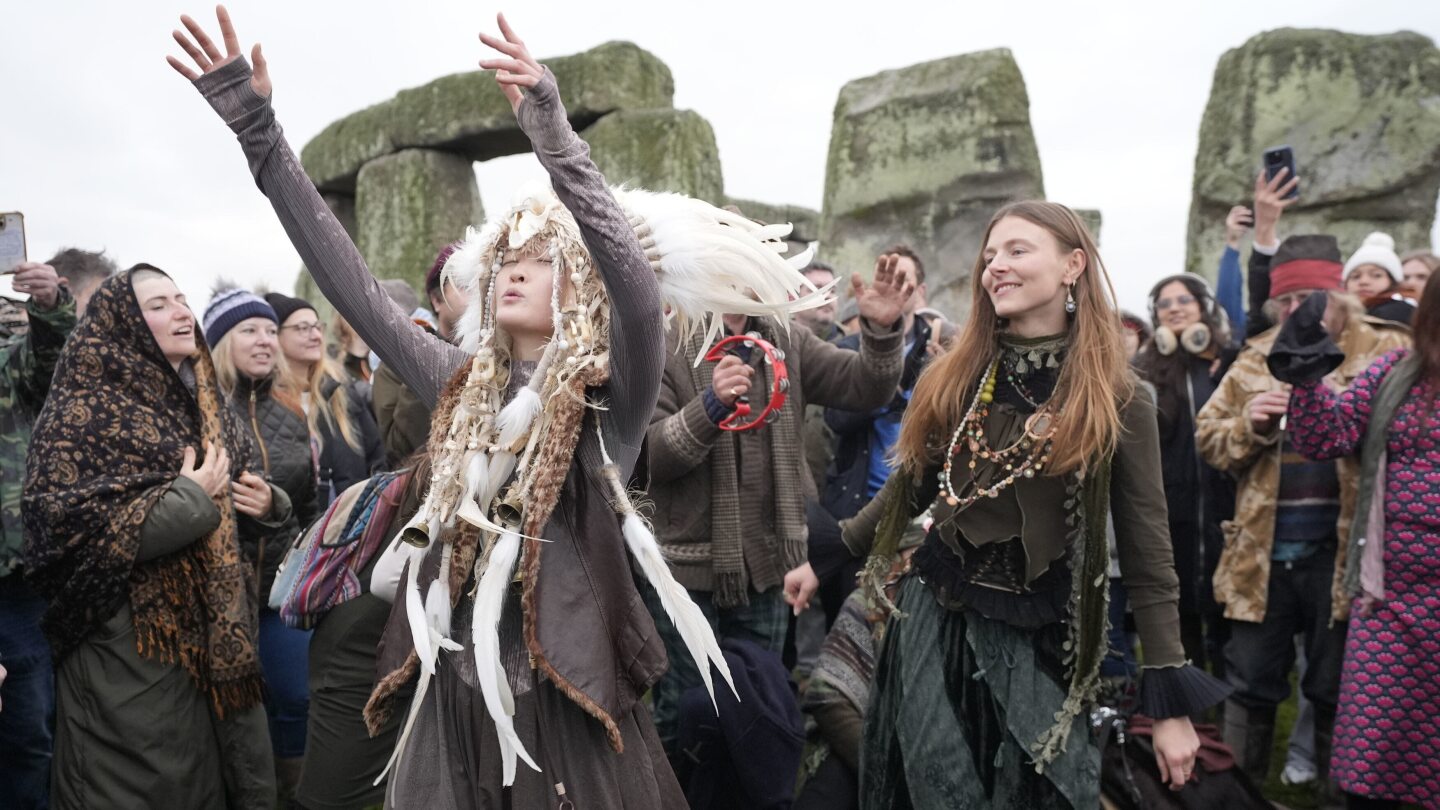
Under the pale glow of dawn on the winter solstice, Stonehenge’s ancient stones once again served as the backdrop for one of humanity’s most enduring celestial celebrations. Thousands of pilgrims and revelers converged upon the prehistoric monument in southwest England, transforming the typically tranquil landscape into a vibrant tapestry of spiritual observance and communal festivity.
As the shortest day of the year commenced north of the equator, participants braved the pre-dawn chill with remarkable patience. The gathering presented a striking visual spectacle—many attendees adorned in elaborate ceremonial costumes while others maintained contemplative silence among the massive stone pillars. The air resonated with rhythmic drumming and spontaneous singing, creating an auditory landscape as rich as the visual one.
This biannual pilgrimage, occurring during both summer and winter solstices, represents far more than mere tradition. For countless participants, the experience carries profound spiritual significance, connecting modern seekers with ancient agricultural rhythms. The monument itself, constructed between 5,000 and 3,500 years ago, demonstrates remarkable astronomical precision—its stones meticulously aligned to capture the sun’s movement during these pivotal celestial events.
While Northern Hemisphere observers marked the beginning of astronomical winter and celebrated the promise of lengthening days, simultaneous celebrations across the Southern Hemisphere honored the summer solstice—the year’s longest day. The winter solstice represents the sun’s lowest arc across the sky, yet participants universally embrace it as a moment of renewal and cosmic rebirth, anticipating the daily incremental increase of sunlight until the June solstice.