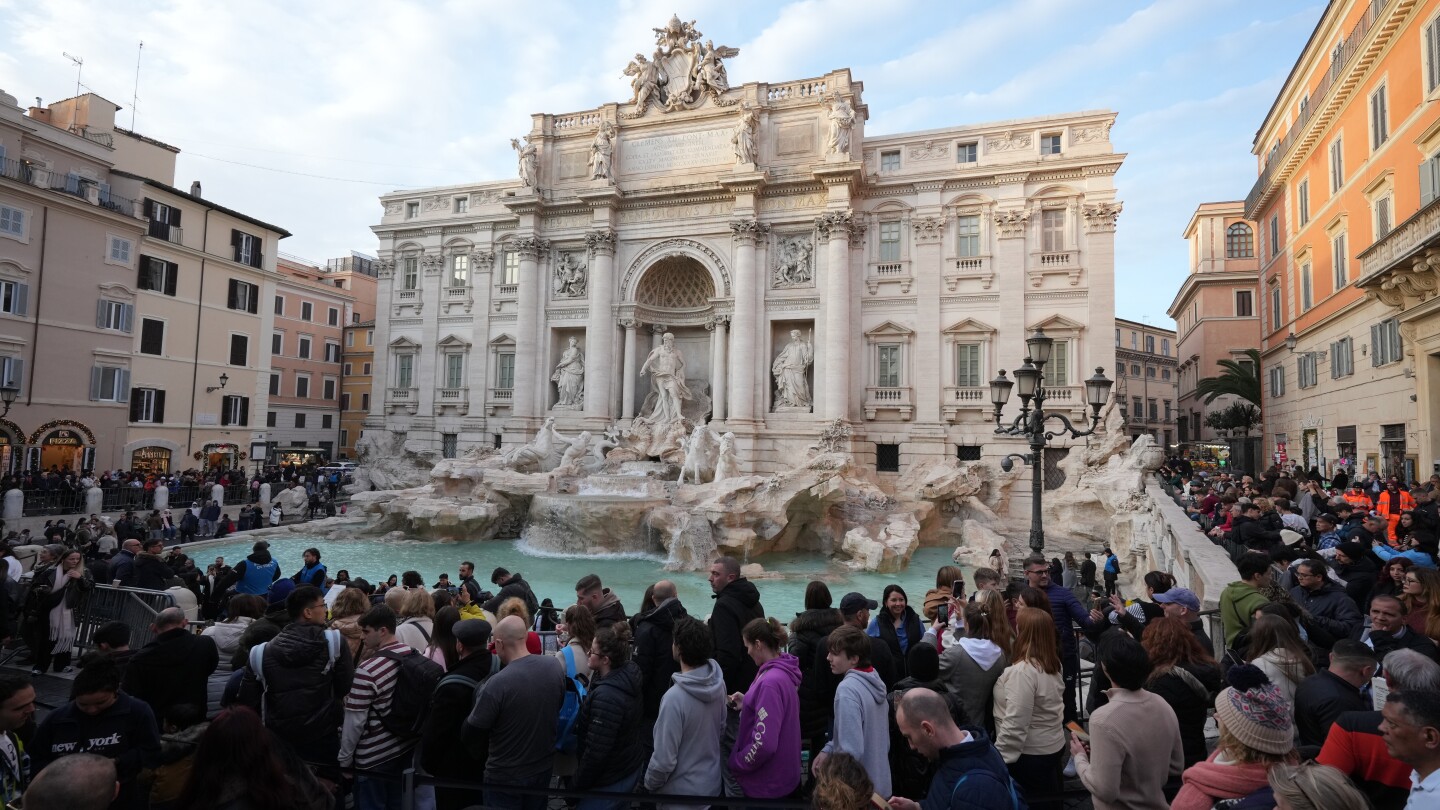
ROME — Visitors to Rome’s iconic Trevi Fountain will now encounter a new requirement beyond the traditional coin toss ritual. Effective February 1st, the city administration has instituted a 2-euro ($2.35) access fee during peak daylight hours for tourists seeking close proximity to the Baroque masterpiece. The measure exempts local residents while maintaining free viewing from the surrounding piazza.
The implementation follows extensive deliberation spanning over a year and aligns with similar tourist management strategies employed at Rome’s Pantheon monument. Mayor Roberto Gualtieri characterized the nominal fee as a necessary measure to regulate visitor flows, enhance the tourist experience, and generate approximately 6.5 million euros annually for preservation of the city’s cultural heritage.
This initiative builds upon a successful year-long pilot program that implemented structured queuing systems and controlled access pathways. The system will operate daily from 9:00 AM to 9:00 PM, with complimentary access restored after nightfall. Tourists may purchase access tickets through online platforms, at designated tourist locations, or during the queuing process.
The fee structure coincides with expanded museum access privileges for registered Rome residents, who will enjoy complimentary entry to an increased number of municipal museums. This dual approach reflects the city’s commitment to balancing cultural accessibility for residents with sustainable tourism management.
Commissioned originally by Pope Urban VIII in 1640 and completed according to Nicola Salvi’s designs in 1762, the fountain achieved global recognition through Federico Fellini’s cinematic masterpiece ‘La Dolce Vita.’ The film’s iconic scene featuring Marcello Mastroianni and Anita Ekberg wading in the turquoise waters cemented the fountain’s status as a must-visit destination, now attracting approximately 9 million visitors annually with peak days exceeding 70,000 admissions.