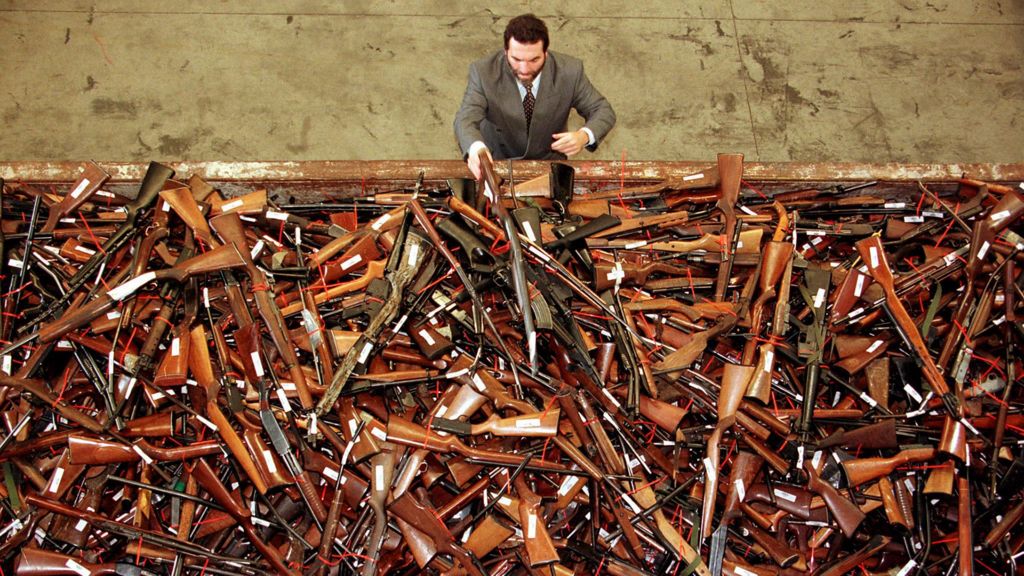
The recent Bondi Beach massacre that claimed 15 lives has violently resurrected Australia’s long-dormant gun control debate, drawing stark parallels to the 1996 Port Arthur tragedy that transformed the nation’s firearm regulations. This latest attack targeting a Jewish Hanukkah celebration has compelled national leaders to confront uncomfortable truths about the evolving landscape of gun ownership in Australia.
Despite being globally celebrated for stringent firearm laws implemented after Port Arthur, Australia now hosts over four million privately-owned guns—nearly double the quantity recorded two decades ago. Current statistics reveal one firearm for every seven Australians, with concerning concentrations in urban centers contrary to conventional wisdom about rural gun ownership patterns.
Roland Browne, a prominent gun control advocate who witnessed both tragedies, emphasizes the disturbing similarities: “They’re both very public places frequented by tourists from around the nation and around the world.” Browne expresses profound disappointment that political action consistently follows rather than prevents such catastrophes.
The government response has been swift. Prime Minister Anthony Albanese announced Australia’s first major national gun buyback scheme since 1996, alongside proposals to limit firearm quantities per owner, eliminate open-ended licensing, mandate Australian citizenship for ownership, and enhance intelligence sharing during license assessments.
However, sporting advocates like Tom Kenyon of the Sporting Shooters Association argue these measures misdirect resources from addressing radicalization—the root cause of the Bondi attack. Kenyon maintains that determined attackers will simply employ alternative weapons if firearms are unavailable, citing vehicle attacks like the 2016 Nice massacre.
Complicating the debate are jurisdictional inconsistencies in firearm regulations. While Western Australia recently implemented caps (5-10 guns per owner), most states lack such restrictions. The alleged Bondi attacker legally owned six registered firearms despite being investigated for extremist links.
The conversation extends beyond quantity to firearm types. Modern high-capacity rifles with rapid-fire capabilities present new challenges unknown in 1996. Meanwhile, Australia still lacks a unified national firearm registry—a Port Arthur reform recommendation now accelerated post-Bondi with expected completion by 2028.
As Australia grapples with balancing public safety against legitimate sporting interests, the nation confronts whether its famed gun control model requires modernization to address contemporary threats while preserving its core life-saving principles.