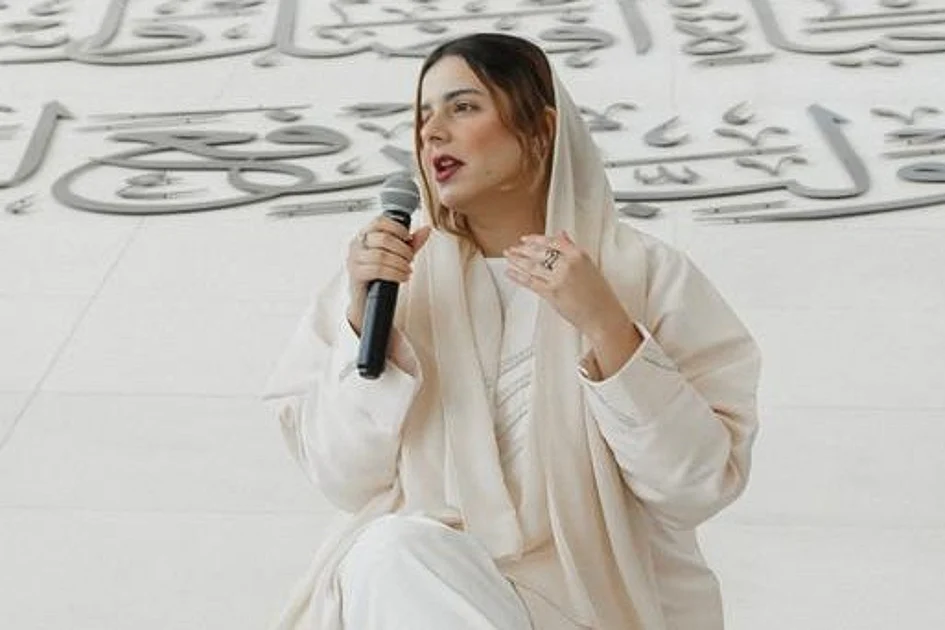
Abu Dhabi-based cinematographer Aldana Alhashmi has redefined creative possibility by transforming profound visual impairment into a unique artistic advantage. Diagnosed with bilateral retinoblastoma—an exceptionally rare eye cancer—at just six months old, Alhashmi now navigates the world with only 25% vision in her left eye after extensive chemotherapy and radiation treatments.
Her childhood, marked by lengthy international medical visits, became the foundation for her artistic journey. “My family brought sketchbooks and art supplies to hospital appointments to keep me occupied during endless waits for scans and tests,” Alhashmi recalls. This early exposure evolved into exceptional artistic skill, earning her recognition as the youngest Emirati fashion designer by age eight.
Rather than viewing her condition as a limitation, Alhashmi describes her camera as a technological extension of herself—a “second eye” that captures details she might otherwise miss. “When I look through the viewfinder, I use one side of my eye, much like how vintage cameras operate. It felt tailor-made for me,” she explains. This perspective has fueled her professional success, including assistant director roles on three Netflix series filmed in the UAE and a recently completed master’s degree in cinematography.
Alhashmi’s journey involved significant educational barriers. She recounts how her mother became a daily advocate at her school, fighting for inclusion during the UAE’s early efforts toward educational integration. A particularly impactful challenge came from a school principal who repeatedly denied her opportunities to participate in stage performances. “This rejection forced me to mature quickly and fueled my determination to exceed even able-bodied expectations,” she notes.
Her advocacy recently culminated in the Dome of Inclusion project, a collaborative installation with Canadian University Dubai, Dubai Holding Entertainment, and ImInclusive. Alhashmi contributed tactile elements representing Emirati culture—Sadu-inspired textures and fabrics symbolizing sea, sun, sand, and desert—ensuring blind visitors could experience the art through touch. The project, which also featured 3D tactile artworks and sign language components, received a memorable visit from Sheikha Latifa, whom Alhashmi describes as a role model for arts advocacy.
“I integrate disability into my art not for sympathy, but for empathy,” Alhashmi emphasizes. “My goal is to foster understanding and empowerment, encouraging society to see capability beyond physical limitations.”