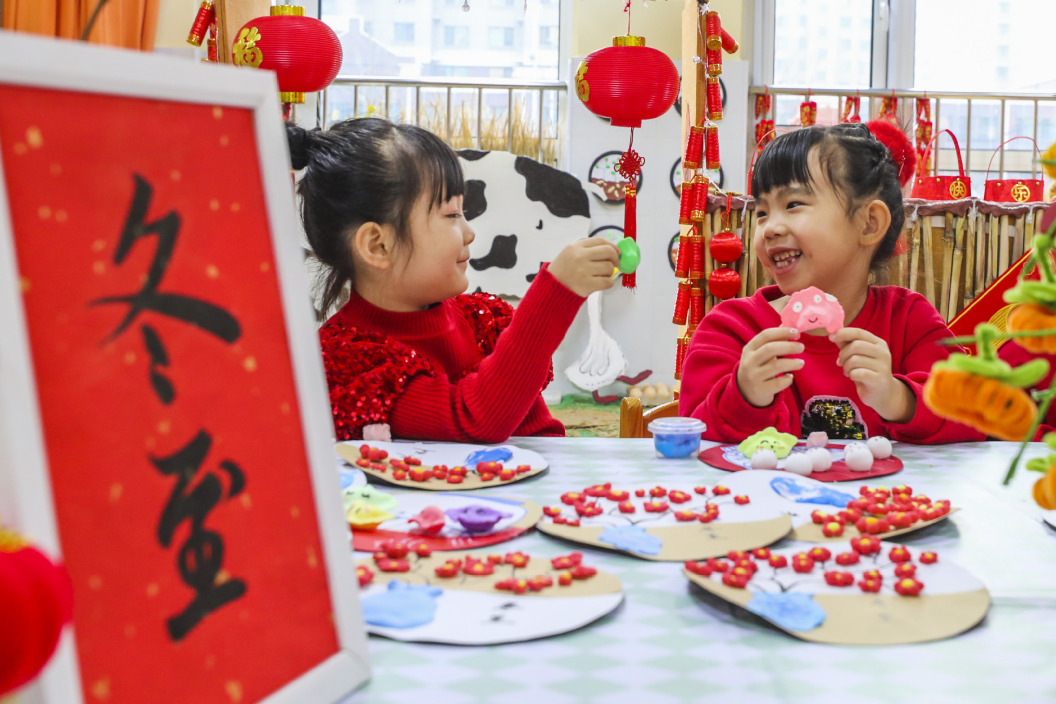
Communities throughout China engaged in vibrant cultural observances on December 18, 2025, to herald the approaching Winter Solstice, which officially occurs on December 21st this year. This astronomical event, marking the year’s shortest day, traditionally signifies the commencement of deep winter and historically represented a period of agricultural respite in China’s farming communities.
Across northern regions, families upheld the customary practice of preparing and consuming dumplings, a tradition believed to provide warmth during the coldest season. Simultaneously, southern provinces celebrated with tangyuan, sweet glutinous rice balls symbolizing family unity and completeness.
Educational institutions incorporated the cultural significance into their curricula. In Lianyungang city, Jiangsu province, kindergarten children participated in hands-on dumpling-making activities under teacher supervision, blending culinary education with cultural preservation. These intergenerational exchanges ensure traditional knowledge transfers to younger generations.
The widespread celebrations demonstrate how modern Chinese society maintains connections to astronomical traditions and seasonal culinary practices. Regional variations in observance methods highlight China’s diverse cultural tapestry while sharing common themes of family gathering, seasonal awareness, and cultural continuity. These activities represent more than ceremonial observances—they serve as living embodiments of intangible cultural heritage adapting to contemporary contexts.