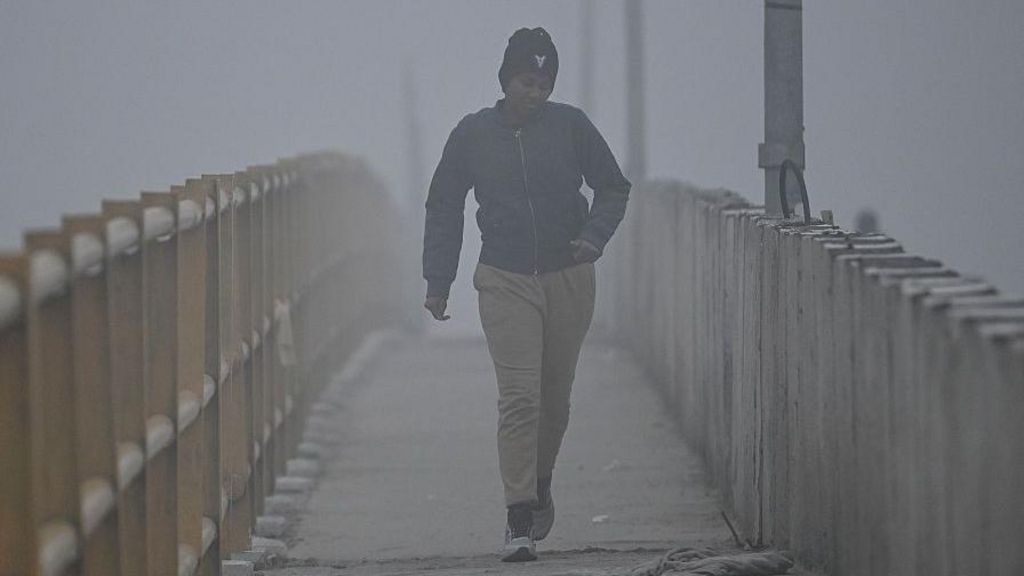
For consecutive days, India’s capital region has been suffocating under an oppressive blanket of toxic haze, creating one of the most severe air pollution events of the season. Meteorological conditions combined with anthropogenic factors have transformed Delhi and its surrounding areas into a health hazard zone, with visibility dramatically reduced and air quality readings reaching alarming levels.
Current environmental monitoring data reveals a staggering Air Quality Index (AQI) reading of 376, predominantly driven by PM2.5 concentrations that exceed the World Health Organization’s safety threshold by more than twenty-five times. These microscopic particles, capable of penetrating deep into lung tissue and entering the bloodstream, present particular dangers to vulnerable populations including children, the elderly, and those with pre-existing respiratory conditions.
In response to the escalating crisis, Delhi’s administration has implemented a comprehensive emergency action plan. Effective immediately, all government and private institutions must transition 50% of their workforce to remote working arrangements. Additional measures include stringent restrictions on construction operations, prohibition of older diesel vehicles from roadways, implementation of hybrid learning models for educational institutions, and enhanced enforcement against vehicles violating emission standards.
The pollution’s impact has extended beyond public health concerns to affect cultural and sporting events. Notably, the hazardous conditions forced the cancellation of an international cricket match between India and South Africa in Lucknow, located approximately 550 kilometers from Delhi, demonstrating the extensive geographical reach of the pollution cloud.
This environmental emergency represents a recurring seasonal pattern for northern India, where winter months typically bring deteriorating air quality. The complex interplay of industrial emissions, vehicular exhaust, agricultural burning practices in neighboring states, and unfavorable meteorological conditions including temperature inversions and diminished wind speeds creates a perfect storm of pollution accumulation that blankets the region annually.
Visual documentation from across the capital shows residents navigating through visibly impaired conditions, with many adopting protective measures such as face masks. Transportation networks continue operating under challenging circumstances, while daily life adapts to the persistent environmental adversity that has become an expected feature of Delhi’s winter season.