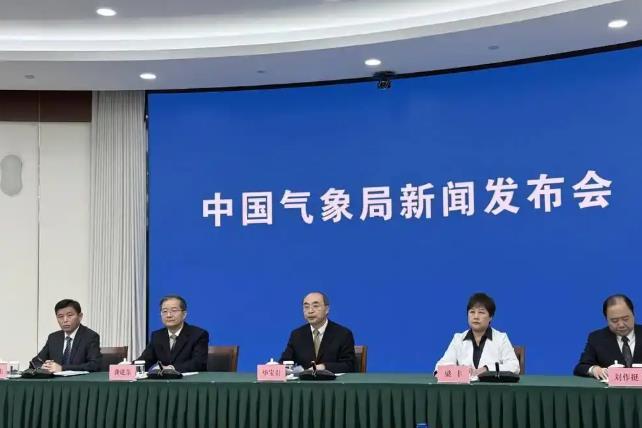
China has launched an ambitious decade-long strategic initiative to develop a globally advanced Earth system forecasting network by 2035. The comprehensive Earth System Forecasting Development Strategy (2025-2035), recently published by the China Meteorological Administration, establishes a detailed roadmap to significantly enhance extreme weather early warning systems and strengthen public safety protections through sophisticated analysis of complex atmospheric, oceanic, and terrestrial interactions.
According to Bi Baogui, Deputy Administrator of the China Meteorological Administration, the strategy incorporates a dual-technical approach that merges the precision of traditional numerical prediction—utilizing supercomputers to simulate physical laws across Earth’s systems—with the computational speed and pattern recognition capabilities of artificial intelligence. “We will continue to advance numerical prediction grounded in physical principles while simultaneously harnessing AI’s potential to extract forecasting patterns from massive meteorological datasets,” Bi stated.
This integration aims to establish a forecasting system that achieves both scientific rigor and operational efficiency. Gong Jiandong, Director of the Earth System Modeling and Prediction Center, confirmed that China’s core forecasting capabilities are projected to reach world-class standards within the designated timeframe.
Key technological benchmarks include achieving kilometer-level global Earth system modeling and hundred-meter-level local modeling, enabling seamless forecasting products ranging from minute-by-minute updates to decade-long climate projections. These advanced capabilities are expected to support disaster prevention and mitigation efforts, particularly for nations participating in the Belt and Road Initiative.
The initiative promises substantial benefits for daily life and national development through significantly improved forecast accuracy and reliability. Liang Feng, Head of the Department of Forecasting and Prediction, emphasized that enhanced weather predictions will dramatically improve convenience and safety for citizens. Through high-resolution modeling and AI integration, the administration aims to refine predictions for typhoons, thunderstorms, hail, and cold waves, providing longer lead times for warnings of flash floods and landslides while enabling more effective evacuation planning and resource allocation.
Additionally, deeper research into extreme weather mechanisms will support China’s carbon peaking and carbon neutrality goals by optimizing emission reduction pathways. The Earth system forecasting network is also anticipated to guide climate-resilient urban planning, helping cities develop enhanced defenses against waterlogging and heat waves.