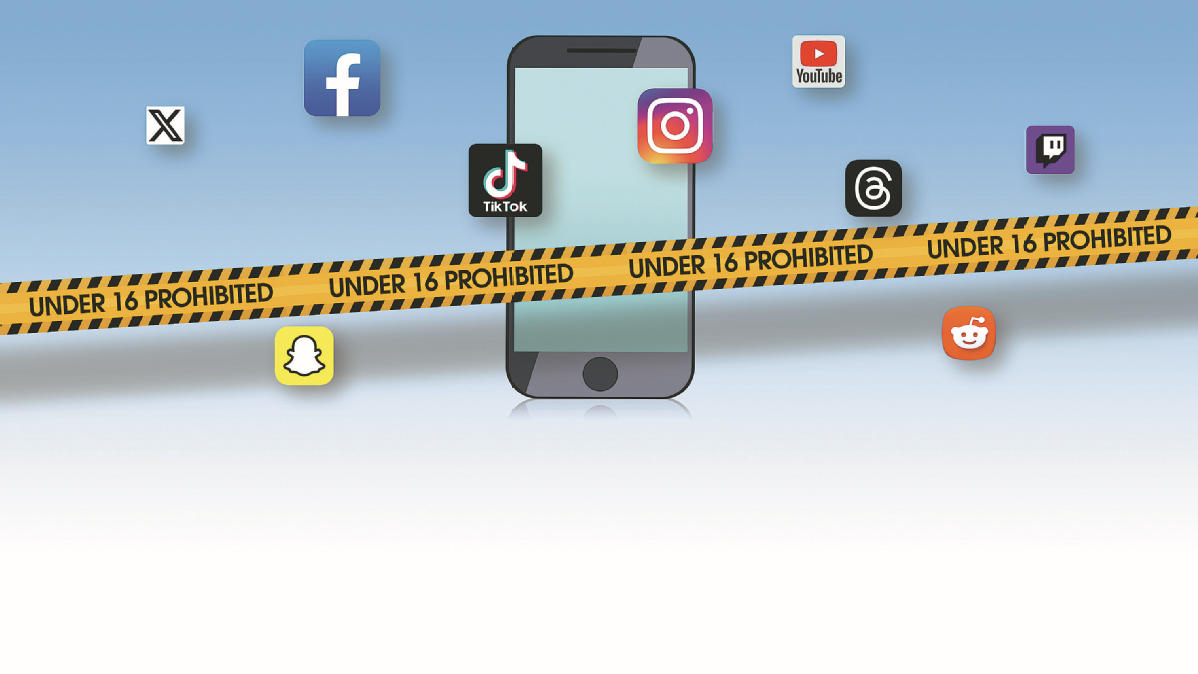
Australia has implemented the world’s first comprehensive social media ban for children under 16, triggering widespread international attention and legal challenges. The groundbreaking legislation, which took effect on December 10, requires major platforms including Instagram, Facebook, X, Snapchat, TikTok, Reddit, and YouTube to implement strict age verification measures or face penalties up to A$49.5 million ($32.9 million).
The policy follows an Australian National University study revealing social media’s negative impact on adolescent life satisfaction, with nearly one-fifth of young Australians actively posting content daily. While platforms like TikTok and YouTube have committed to compliance through facial age estimation, credit card authorization, and government ID verification, Reddit has mounted a constitutional challenge in Australia’s High Court, arguing the ban violates implied political communication freedoms.
Communications Minister Anika Wells defended the legislation, stating the government stands with “Australian parents and kids, not platforms.” Health Minister Mark Butler compared Reddit’s lawsuit to “Big Tobacco against tobacco control,” accusing the platform of prioritizing profits over child protection.
Academic responses remain divided. Professor Julian Sefton-Green of Deakin University praised the legislation as “inspiring” for challenging multinational platforms’ power, while Edith Cowan University’s Catherine Archer warned of potential anxiety and mental health issues among teens forced from their primary communication channels. Concerns also emerged that the ban might drive young users to less regulated platforms and messaging apps where bullying could persist.
Prime Minister Anthony Albanese acknowledged implementation challenges, comparing potential circumvention to underage drinking, but emphasized the importance of establishing protective frameworks. Early indicators suggest significant impact, with an Australian Broadcasting Corporation survey indicating one-quarter of under-16 users might abandon social media entirely.
Digital rights advocates expressed concerns about increased identity theft risks and questioned whether the ban addresses root causes rather than symptoms. Tom Sulston of Digital Rights Watch warned that “bullies, abusers, and predators will not go away” but merely follow children to permitted platforms.
Globally, the Australian experiment is being closely monitored, with Germany, Denmark, New Zealand, and Malaysia considering similar policies. Professor Michael Salter of the University of New South Wales highlighted the ban as a necessary response to escalating online sexual exploitation, noting that 300 million children globally experience online sexual abuse annually, predominantly through social media platforms.
The outcome of this pioneering legislation may establish new precedents for how nations regulate digital spaces for young users, balancing protection against fundamental rights and practical enforcement challenges.