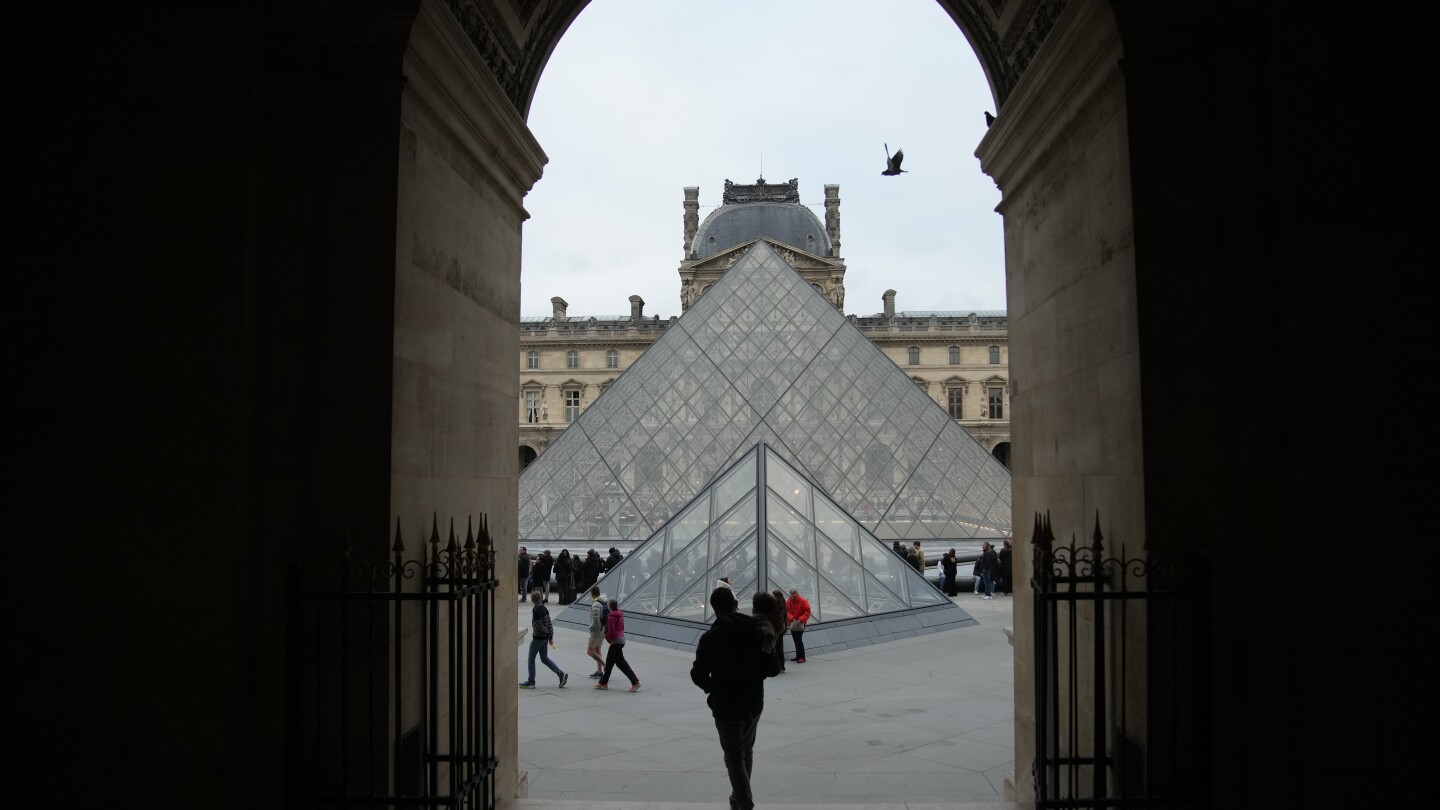
PARIS — The Louvre Museum, the world’s most visited cultural institution, faces an unprecedented institutional crisis as a prolonged staff strike reveals deep-seated operational failures compounded by a spectacular $102 million jewel theft. What began as a labor dispute has evolved into a comprehensive examination of the museum’s security protocols, structural integrity, and management competence.
The current turmoil stems from multiple converging factors: chronic understaffing, deteriorating infrastructure, and security vulnerabilities dramatically exposed by the October daylight robbery of crown jewels. The heist, executed with startling efficiency as thieves escaped with approximately 30 seconds to spare, served as a catalyst for long-simmering staff grievances to erupt into full-scale industrial action.
French parliamentary investigations revealed cascading security failures: only one of two surveillance cameras functioned properly at the break-in point, security personnel lacked adequate monitoring equipment, and police were initially dispatched to an incorrect location when alarms finally activated. Audits from 2017 and 2019 had previously identified these vulnerabilities, yet recommended corrective measures were never fully implemented.
The physical plant itself presents additional challenges. Sections of the centuries-old palace have been deemed unsafe and closed to the public, including nine rooms in the Campana Gallery dedicated to ancient Greek ceramics. Technical reports cited ‘particular fragility’ in supporting beams, forcing staff relocations and ongoing closures. Unions point to incidents like November’s water leak that damaged hundreds of historical volumes as evidence of broader institutional neglect.
Culture Ministry officials have attempted to resolve the standoff by proposing to cancel planned 2026 funding cuts, hire additional security and visitor services staff, and increase wages. However, unions have rejected these measures as insufficient, indicating that trust has deteriorated beyond simple solutions.
The museum has partially reopened a limited ‘masterpiece route’ allowing access to iconic works like the Mona Lisa and Venus de Milo—a temporary measure that underscores how far normal operations have deteriorated. Pressure now focuses squarely on Louvre President Laurence des Cars, with the ministry appointing Philippe Jost, who oversaw Notre Dame’s restoration, to assist in reorganizing the museum’s operations.
President Macron’s ‘New Renaissance’ renovation plan, launched in early 2025 to modernize the Louvre and address overcrowding, faces criticism for prioritizing high-profile projects over fundamental infrastructure and security needs. A proposed dedicated room for the Mona Lisa with separate entrance has become symbolic of what staff perceive as misplaced priorities, fearing it may lead to tiered access systems rather than addressing urgent safety concerns.
Former director Jean-Luc Martinez, who led the institution from 2013 to 2021, recently told senators he believed the museum’s security plan was adequate during his tenure, stopping short of accepting personal responsibility for the documented failures. All four suspected robbers have been apprehended, but the stolen jewels remain missing, with Interpol listing them in its database of stolen art amid concerns they may be dismantled or smuggled internationally.