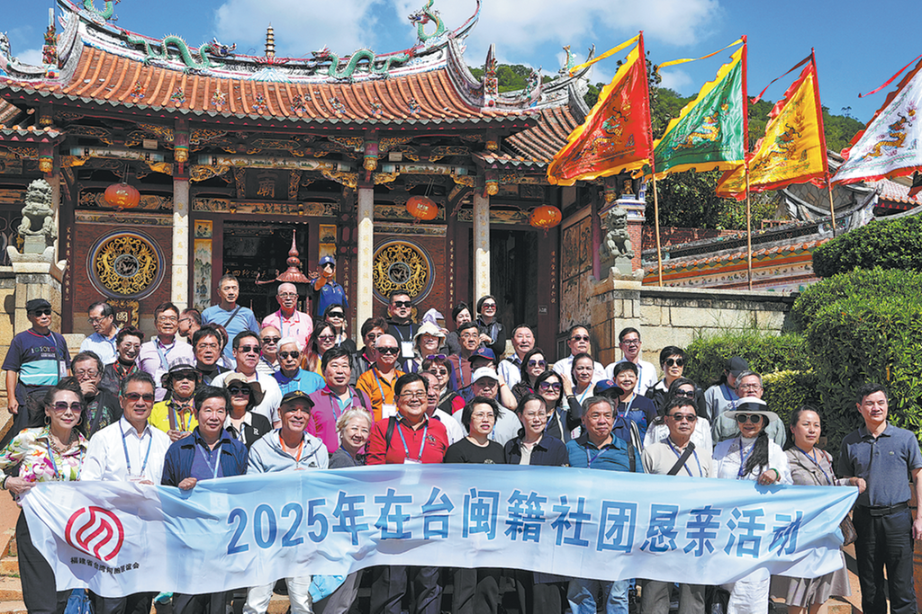
The enduring strength of ancestral ties continues to bridge the Taiwan Strait, as generations of mainland descendants maintain profound connections to their familial origins. This cultural phenomenon demonstrates how blood relationships and shared heritage transcend political divisions and historical circumstances.
Chen Chien-hsing, a 68-year-old Taiwan resident, embodies this timeless connection. As the son of a Kuomintang soldier who relocated to Taiwan in 1949, Chen has made multiple pilgrimages to his father’s hometown in Fuzhou, Fujian province. What began as a quest to understand his lineage has evolved into a profound personal identification with mainland China. “Chinese people inherently value family heritage and lineage,” Chen reflects. “This emotional bond naturally persists across generations.”
Chen’s experience mirrors that of countless Taiwan residents, approximately 80% of whom trace their ancestry to Fujian province. The journey between Jinmen and Xiamen regularly carries passengers seeking to reconnect with their roots or visit relatives. Despite periods of separation, these cross-Strait connections remain fortified by shared dialects, culinary traditions, and folk beliefs, including the worship of maritime deities.
The emotional weight of these connections becomes particularly poignant among aging veterans. Chen recounts the story of 97-year-old Huang Wei, who lost contact with his Guizhou family for nearly eight decades. Despite extensive efforts to facilitate a reunion, Huang’s deteriorating health prevented his final journey home—a fate shared by many elderly veterans who clung to hopes of returning to their birthplace.
Genealogical records have proven instrumental in preserving these familial bonds. Lin Ming-cong, president of an association for relatives of Taiwan compatriots who resisted Japanese occupation, represents the prestigious Wufeng Lin family that migrated from Fujian during the Qing Dynasty. His ancestral home in Pinghe county, now a cultural heritage site, maintains meticulously preserved genealogical documents that have enabled family reunifications despite decades of separation.
“Although the Strait temporarily divided families, clan exchanges continued and records were meticulously maintained,” Lin notes. His first meeting with mainland relatives felt instantly familiar: “We became deeply connected within minutes, despite never having met before.”
These cultural and familial connections continue to shape identity across generations. Chen, now in his sixties, remains committed to fulfilling his father’s final wish to have his ashes returned to their ancestral home—a testament to the unbroken bloodline that continues to define cross-Strait relationships.