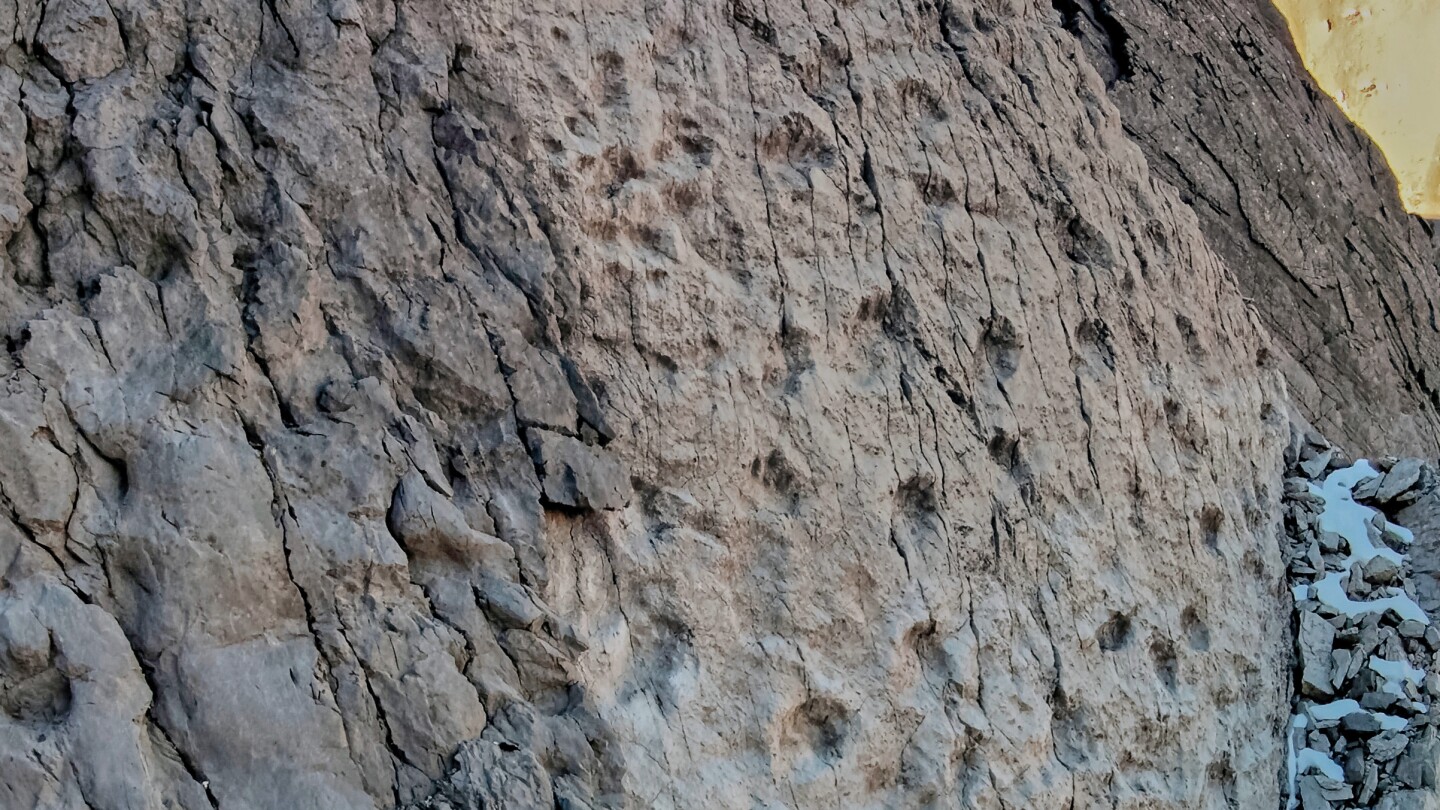
Italian officials revealed on Tuesday that a wildlife photographer has unearthed one of the most extensive known collections of dinosaur footprints, dating back approximately 210 million years to the Triassic Period. The remarkable discovery occurred in Stelvio National Park, adjacent to Bormio—the designated Alpine skiing venue for the 2026 Milan Cortina Winter Olympics.
Experts expressed astonishment at both the quantity and location of the findings. The trackway spans roughly five kilometers (three miles) along the Swiss border region, containing an estimated 20,000 individual footprints in an area previously unknown for dinosaur evidence. This prehistoric coastal zone has now revealed unprecedented paleontological treasures.
Cristiano Dal Sasso, paleontologist at Milan’s Natural History Museum, described the discovery as surpassing fantasy. Wildlife photographer Elio Della Ferrera initially contacted Dal Sasso after identifying the formations during a September expedition aimed at capturing deer and vultures.
The impressions were created by long-necked bipedal herbivores measuring up to 10 meters (33 feet) in length and weighing approximately four tons—characteristics comparable to Plateosaurus specimens. Numerous tracks display 40-centimeter widths with clearly visible claw marks.
Analysis of the patterns indicates social herd behavior, with dinosaurs moving collectively at deliberate paces without evidence of panic or rushing. Circular formations suggest periodic stopping points, potentially serving protective functions against predators.
The remote discovery site poses significant accessibility challenges, situated 2,400-2,800 meters above sea level on a north-facing rock wall mostly shaded from sunlight. Della Ferrera noted the prints remained inconspicuous without powerful photographic equipment, requiring him to scale a vertical rock face for closer examination.
Lombardy Regional Governor Attilio Fontana celebrated the find as an unexpected Olympic gift, though winter accessibility remains impractical. No immediate plans for public viewing have been established due to the extreme elevation and rugged terrain surrounding the prehistoric trackway.