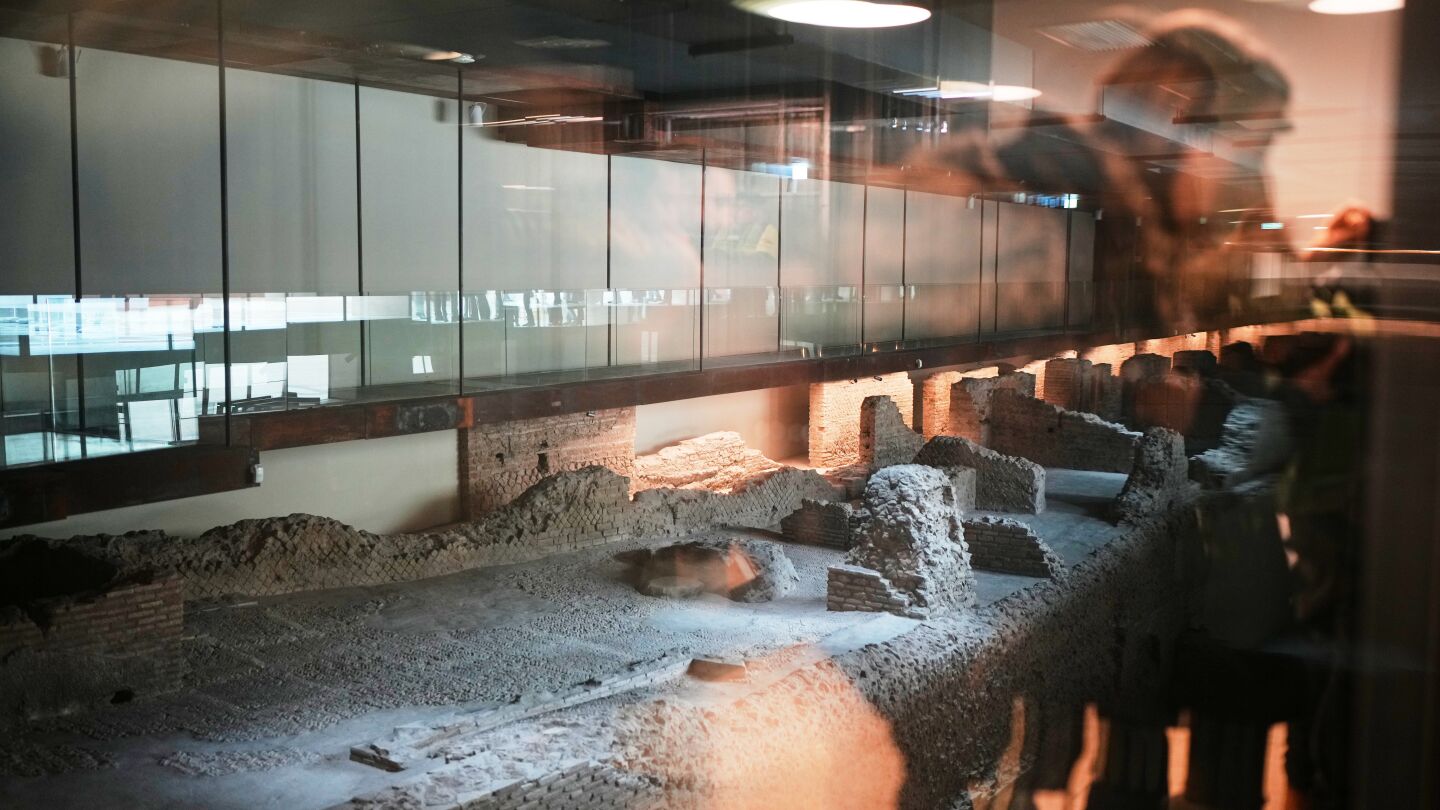
ROME — In an unprecedented fusion of archaeological preservation and urban infrastructure, Rome inaugurated two groundbreaking subway stations on Tuesday that double as underground museums. The centerpiece Colosseo station, situated deep beneath the iconic Colosseum, showcases an extensive collection of ancient artifacts discovered during its construction, transforming daily commuting into a historical journey.
Visitors descending into the Colosseo station are greeted by meticulously curated displays featuring second-century BC ceramics, stone wells, suspended buckets, and the preserved ruins of a first-century thermal bath complex. Interactive screens document the painstaking excavation process, providing context for the project’s extended timeline while engaging archaeology enthusiasts.
The Metro C line represents one of Europe’s most complex urban infrastructure projects, plagued by two decades of bureaucratic delays, funding challenges, and the immense logistical complications of building through archaeologically sensitive ground. Construction manager Marco Cervone emphasized the dual challenge of managing substantial groundwater while preserving both underground discoveries and surface structures.
Simultaneously opened Porta Metronia station reveals another remarkable find: an 80-meter military barracks dating to the early second century, identified by its strategically offset doorways designed to prevent soldier collisions. Archaeologist Simona Moretta confirmed the structure likely housed either imperial guards or urban security forces. The station also contains a residential dwelling with exceptionally preserved frescoes and mosaics, with plans for an expanded museum facility.
The monumental construction effort has yielded over 500,000 artifacts to date, requiring innovative engineering solutions including ground freezing techniques and sacrificial concrete diaphragms. With three-quarters of the planned 31 stations now operational, the complete 29-kilometer line is projected to cost approximately €7 billion and carry up to 800,000 daily passengers upon its 2035 completion.
The next phase will see the line extending beneath Trajan’s Column, the Basilica of Maxentius, and Renaissance palaces before reaching Piazza Venezia at record depths of 48 meters. Once finished, the transit system will finally provide relief from Rome’s notorious traffic congestion while offering unprecedented access to the city’s layered historical narrative.