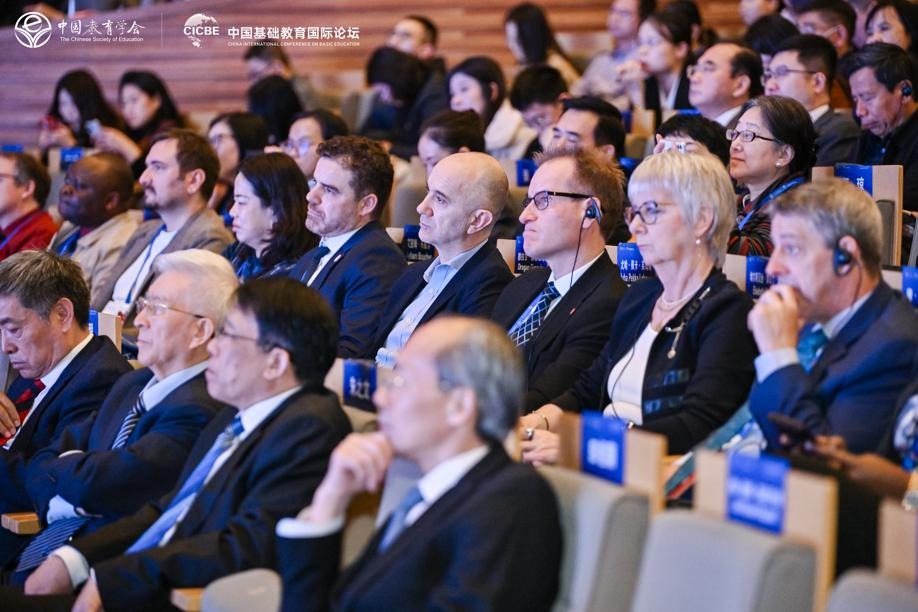
Shanghai became the epicenter of educational innovation this weekend as the China International Conference on Basic Education (CICBE) 2025 convened nearly 400 international experts to chart the future of artificial intelligence in classrooms worldwide. The two-day summit, jointly organized by the Chinese Society of Education, Beijing Foreign Studies University, Shanghai Normal University, and Jiading district government, produced a groundbreaking global initiative for responsible AI adoption in learning environments.
The conference’s centerpiece emerged as the “Initiative on Leveraging Artificial Intelligence for Educational Innovation,” a six-pillar framework advocating for proactive technology integration, equitable access, AI-enhanced governance, collaborative mission fulfillment, ethical standardization, and international cooperation. This comprehensive document represents the first globally-coordinated effort to establish guardrails for AI’s educational applications.
In his virtual address, China’s Vice-Minister of Education Ren Youqun outlined three transformational principles: ensuring inclusive access through “Digital for Good” initiatives, fostering innovation capabilities in new generations, and promoting open global collaboration in educational governance. His remarks were echoed by Chinese Society of Education President Zhu Zhiwen, who noted AI’s profound reshaping of “human production, lifestyle and education.”
Academic heavyweights including Turing Award laureate John Edward Hopcroft provided nuanced perspectives, with the computer science pioneer observing that while “AI can serve as a powerful assistant to teachers,” it cannot replace the “essential human connection at the heart of education.” Indiana University Professor Curtis J Bonk demonstrated cutting-edge self-directed learning tools, while UNESCO Chairholder Daniel Burgos presented ethical frameworks for educational AI implementation.
The conference structured its exploration through five specialized sub-forums examining AI’s role in educational equity, pedagogical transformation, and teacher empowerment, featuring nearly 70 experts from 13 nations. The event concluded with field visits to Shanghai’s innovative educational institutions, offering firsthand observation of technology integration practices in Jiading district’s schools and innovation hubs.